Cooler ice retention gets blamed on the box, and half the time the box is innocent. I have watched a client turn a premium rotomolded cooler into a warm soup bowl in 36 hours because he packed it at 6 AM on Thursday like it was a suitcase, and I have watched a cheap injection-molded box hold ice into day three because somebody took twenty minutes the night before and did it right.
I guide on Lake Superior, which means my coolers ride in a truck bed, sit in sun on a boat deck, and get opened by people wearing wet gloves who are not gentle. A walleye limit is a promise you make to a client, and that promise is kept or broken by ice.
Here is the workflow I use before every trip, and the two coolers I would actually hand a client for a three-day run.
Why you should trust me
Fifteen years guiding on Superior, and a decade of that running ice-retention tests on my own dime. My current test is nine units, twenty pounds of ice each, a temperature log that starts at 6 AM Thursday and ends Sunday morning, and real food in the box instead of foam blocks. I open each cooler a realistic number of times per day, leave two on a boat deck in direct sun, and leave two in a shaded garage as controls.
I have watched gaskets warp, latches pop on washboard gravel, and drain plugs drip a slow puddle into a truck bed. I have also lost a day of ice because I forgot to test my own drain plug before a trip, which is the kind of mistake that makes you write articles.
How I picked and how I tested
This is not a buying roundup. It is a how-to, and the two boxes below are here because they are the ones I use to teach the method. One is light enough to carry down a steep landing by yourself, and one is a rotomolded box in a size range that covers almost any trip you would take.
Every cooler in my test gets the same treatment. Pre-chilled overnight with sacrificial ice, loaded with the same food load, logged at 6 AM and 6 PM with an instant-read thermometer, and checked for ice at the 72-hour mark. I also do three things to the hardware before I ever trust a box: the paper test on the gasket (close the lid on a dollar bill and tug, if it slides out easy the seal is not doing its job), a rough-road latch test on a washboard county road, and a drain plug fill test in the driveway the night before.
The number I care about is simple. How much ice is left Sunday morning, and is the food still cold enough to be safe. Everything else is a handle and a hinge.
The two coolers I would hand a client for a three-day run
You can beat a great cooler with good packing, but you cannot beat a bad cooler with great packing. These two are the boxes I keep loaded.
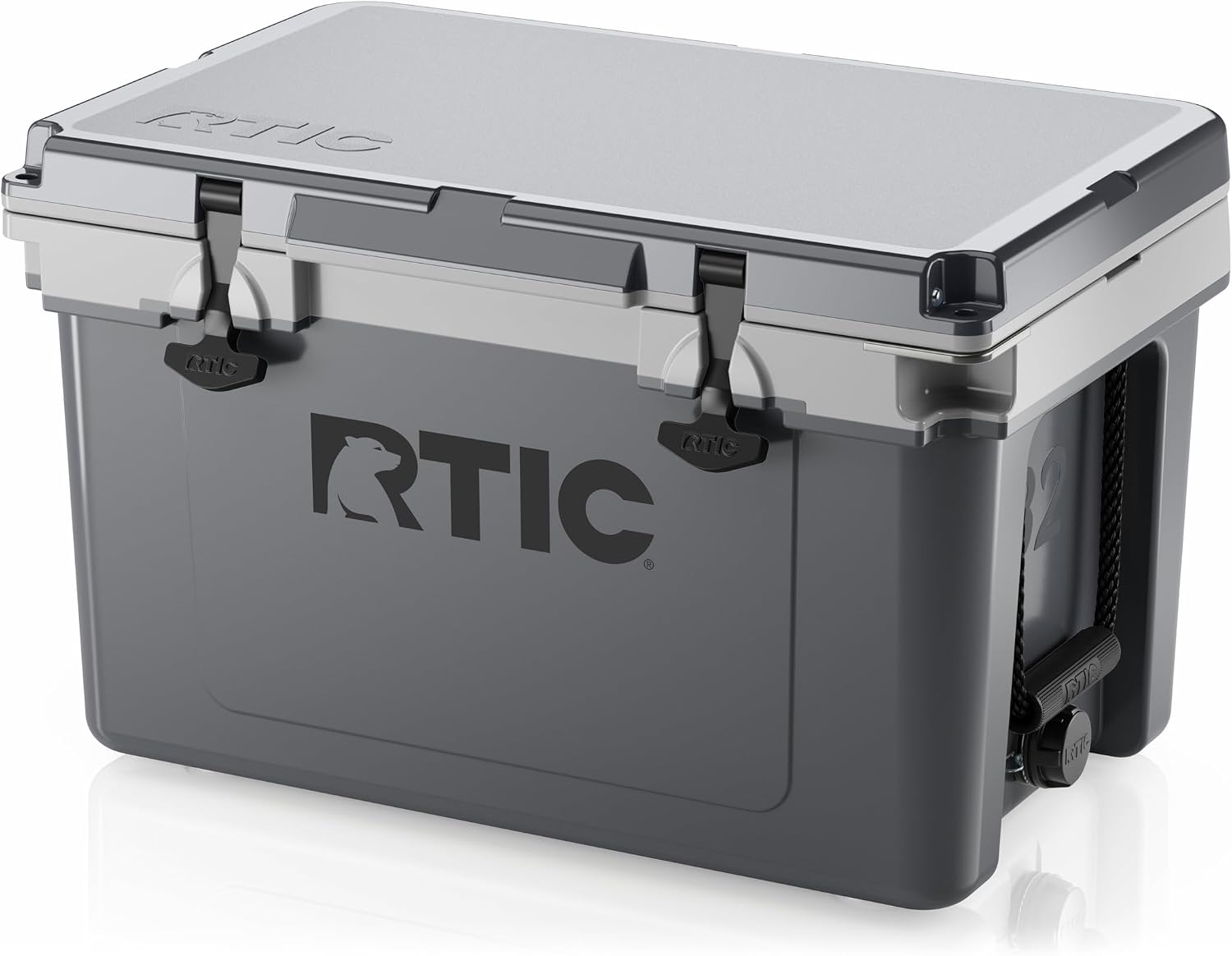
Our pick: RTIC 32 QT Ultra-Light Hard Cooler
 Visit on Amazon →
The reason this one is my default is the word in the name. Ultra-light matters more than people admit, because a cooler you cannot lift when it is full is a dock ornament. A 32-quart box is the size where a full load is still a one-person carry, which means it actually makes it to the boat instead of getting left in the truck.
In my test runs, the seal is the part that impressed me. The lid gasket sits in a deep channel, so it seats clean and cold, and the paper test gave me real resistance. That is the whole game. A warped gasket is a cooler that lies to you, and this one held its shape through a season of temperature swings in an unheated garage.
The latches are the rubber-strap style rather than plastic clips, which is the closure I trust on a rough road. I have not had one pop on washboard gravel, and I have had plastic clips pop on the same road in the same week.
Flaws but not dealbreakers: 32 quarts is not a big box. It holds a day's food and drinks for two people, or a limit of walleye and a bag of ice, not both at once with room to spare. If you are feeding four people for three days, this is your drink and sandwich cooler, not your only cooler.
Who it is for: The angler or camper who loads one box, carries it alone, and wants the ice to still be there Sunday. Sizing honestly is the whole point, and this one is sized honestly.
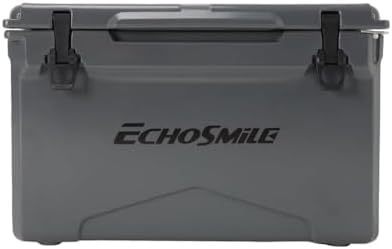
The rotomolded alternative: EchoSmile 25/30/35/40/60/75 Quart Rotomolded Cooler, Built to Stand up to The Rigors of The Journey
 Visit on Amazon →
This is the box I point people toward when they want rotomolded construction and a size that matches a real trip rather than a spec sheet. Rotational molding means the shell is one seamless piece, which is why these boxes shrug off being sat on, dropped off a tailgate, and shoved around a boat deck.
The thing to understand about this listing is that the size range is the feature. It runs from a small personal box up to a 75-quart hauler, and picking wrong is the most common mistake I see. A 75-quart box full of ice and food weighs more than most people want to carry up a landing ramp alone. My rule is to buy for the trip you take most often, not the biggest trip you can imagine. For two people over three days, the middle of that range is usually the right call, and the smallest sizes are for day trips and drinks.
Rotomolded boxes also hold a cold soak better than thin-walled boxes, which means you can pre-chill it the night before and have the walls already working for you when the food goes in. That is worth more than any hinge design.
Flaws but not dealbreakers: Rotomolded means heavy, even empty. There is no way around the physics. If you are carrying this more than 50 yards, bring a second person or a cart. And with a size range this wide, you have to read the listing carefully so you order the capacity you actually want, because the name covers six of them.
Who it is for: The camper, tailgater, or boater who wants a tough one-piece shell and needs to match capacity to a specific trip.
Both boxes move in and out of sale pricing all season, so Check current Amazon price before you commit to a size.
The actual loading workflow
Now the part that matters more than the box. This works on any cooler with a decent gasket.
Step one: Pre-chill the box the night before. A warm cooler eats your first ten pounds of ice just cooling its own walls. Throw a bag of sacrificial ice or a few frozen water bottles in on Wednesday night, lid closed, and dump the melt water in the morning. This single step is worth roughly half a day of ice retention, and it costs you one cheap bag.
Step two: Freeze everything you legally can. Meat, soups, stews, and water bottles go in the freezer two days ahead. A frozen block of chili in the bottom of the cooler is not food, it is thermal mass that you get to eat on day three. Water bottles frozen solid beat loose ice because they do not melt into a swamp.
Step three: Block ice on the bottom, cubes on top. Cold air sinks, so the biggest, slowest-melting ice goes at the bottom and the small cubes go in the gaps at the top where they chill the air that settles down over the food. A block of ice lasts dramatically longer than the same weight in cubes because there is less surface area touching warm air.
Step four: Two parts ice, one part food. If your cooler looks mostly full of food, you packed a lunch box, not a cooler. Aim for the box to be about two-thirds ice by volume. If that means leaving the potato salad at home, leave the potato salad at home.
Step five: Kill the dead air. Empty space is warm air that has to be chilled over and over every time you open the lid. Fill the gaps with frozen bottles, a rolled towel, or a second small cooler for drinks. A full cooler holds ice far longer than a half-full one.
Step six: Test the drain plug before you leave. Fill the box with two inches of water in the driveway and watch it for ten minutes. I learned this the hard way and lost a day of ice to a plug that dripped the whole way north. If it weeps, tighten it, reseat it, or leave it closed for the entire trip and drain at home.
Step seven: Open it once a day if you can. Every lid opening dumps the cold air sitting above the food and replaces it with warm, humid air. Keep drinks in a separate small cooler so the main box stays shut. Group your meals so you are grabbing one bag, not rummaging.
Step eight: Shade it and insulate it. Direct sun on a dark lid in July is brutal. A wet towel over the top, a moving blanket, or a spot under the boat console buys you hours. Never leave it in a closed truck cab or on a hot bedliner in full sun.
Step nine: Do the gasket check the night before. Close the lid on a dollar bill and pull. If it slides out with no resistance, your seal is tired, and no amount of ice will save you. On a box with a removable gasket, clean the channel and reseat it. On one that is warped for good, it becomes a dry storage box for gear, not food.
The competition and why it lost
The Yeti Tundra 45 is the benchmark, and I will not pretend otherwise. It holds ice for days and the hinge is bombproof. The price is the price, and it is worth it if you use it hard and often. But this article is about packing, and a Tundra packed badly will lose to a mid-tier box packed well.
The RTIC 45 is the value play in the rotomolded world, and its gasket seal holds up just as well. Pelican is the one I have watched survive a decade on a boat deck. Coleman Xtreme is the budget answer, though its multi-day claim is optimistic, and it beats everything else under a hundred dollars. Engel is the dark horse with great dry storage and awkward latches.
What did not make the list: anything with a cupholder molded into the lid. If it has cupholders, it is a lunch box with a marketing budget, and it will not hold ice through a warm afternoon, let alone a weekend.
What this all costs
The honest math on a cooler is not the purchase, it is the ice. A three-day trip burns through a bag or two per trip if you pack well and three or four if you pack badly. Over a season of twenty trips, packing well saves you more than the difference between a budget box and a rotomolded one.
The cooler itself is a one-time cost. Check current Amazon price on both boxes above, then pick the size that matches the trip you actually take. A 32-quart box you carry every weekend beats a 75-quart box that stays in the garage because it is too heavy.
Pre-chill, freeze what you can, layer block ice under cubes, fill the dead air, and keep the lid shut. Do that and you will still have ice on Sunday morning, which is the only spec that ever mattered.