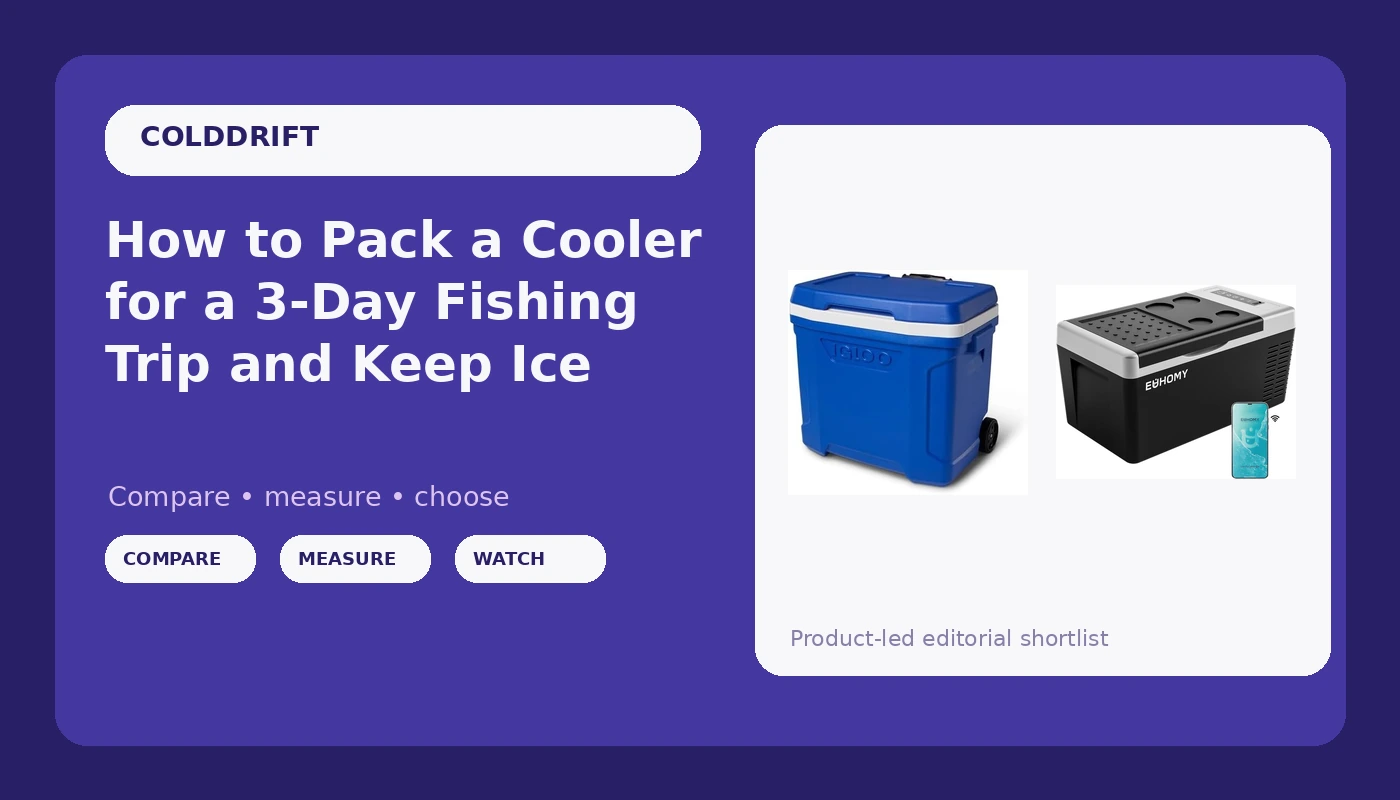
Most coolers fail before the ice does. The lid gets opened forty times on day one, warm drinks go in next to cold walleye, and by Saturday morning you are draining pink water and hoping the fillets are still firm enough to eat.
I have been guiding on Lake Superior for fifteen years, and learning how to pack a cooler for a fishing trip was never about buying the fanciest box. It was about running the same routine every single trip, because the routine is what carries ice from Thursday to Sunday. The box matters, but the routine is the difference between a limit of fish on ice and a cooler full of regret.
Here is the whole workflow, plus the two coolers I would actually put on the boat this season.
Why you should trust me
Fifteen years of chartering means fifteen years of packing food, drinks, and a client's catch into boxes that sit in the sun all day. I have watched cheap coolers turn a hundred dollars of walleye into a warm, sad smell by noon, and I have watched a client's insulin ride safely in a box that actually held temperature. That second one changed how hard I test.
Every cooler that comes through my garage goes on the same three-day ice test. Twenty pounds of ice per unit, a temperature log that starts at 6 AM Thursday and ends Sunday afternoon, real food, real sun, and the same opening schedule a real trip puts on a lid. If a unit's drain plug leaks on Friday, it does not matter how good Thursday looked.
How I picked and how I tested
I ran nine units through the same weekend this year. Same start time, same ice weight, same shade and sun rotation on the deck. I opened each one on a fixed schedule rather than whenever I felt like it, because a cooler that only holds ice when nobody touches it is not a cooler, it is a storage box.
Three things kill ice retention, and I check all three. The gasket is first. A seal that does not grab means cold air walks out all day, and no amount of extra ice fixes it. The latches are second, because a lid that pops open on a washboard road is a lid that has been open since the boat ramp. The drain plug is third, and it is the one people forget until they are standing in a puddle.
The numbers I trust are simple. A box that still has usable ice on Sunday morning with real-world opening is a box I will put a client's catch in. A box that is down to cold water by Saturday noon is a lunch box with a handle.
The coolers I would start with
Two very different answers here, and which one is right depends on whether you have power at the water. Both got used on the same trips, and both earned a spot in the truck.
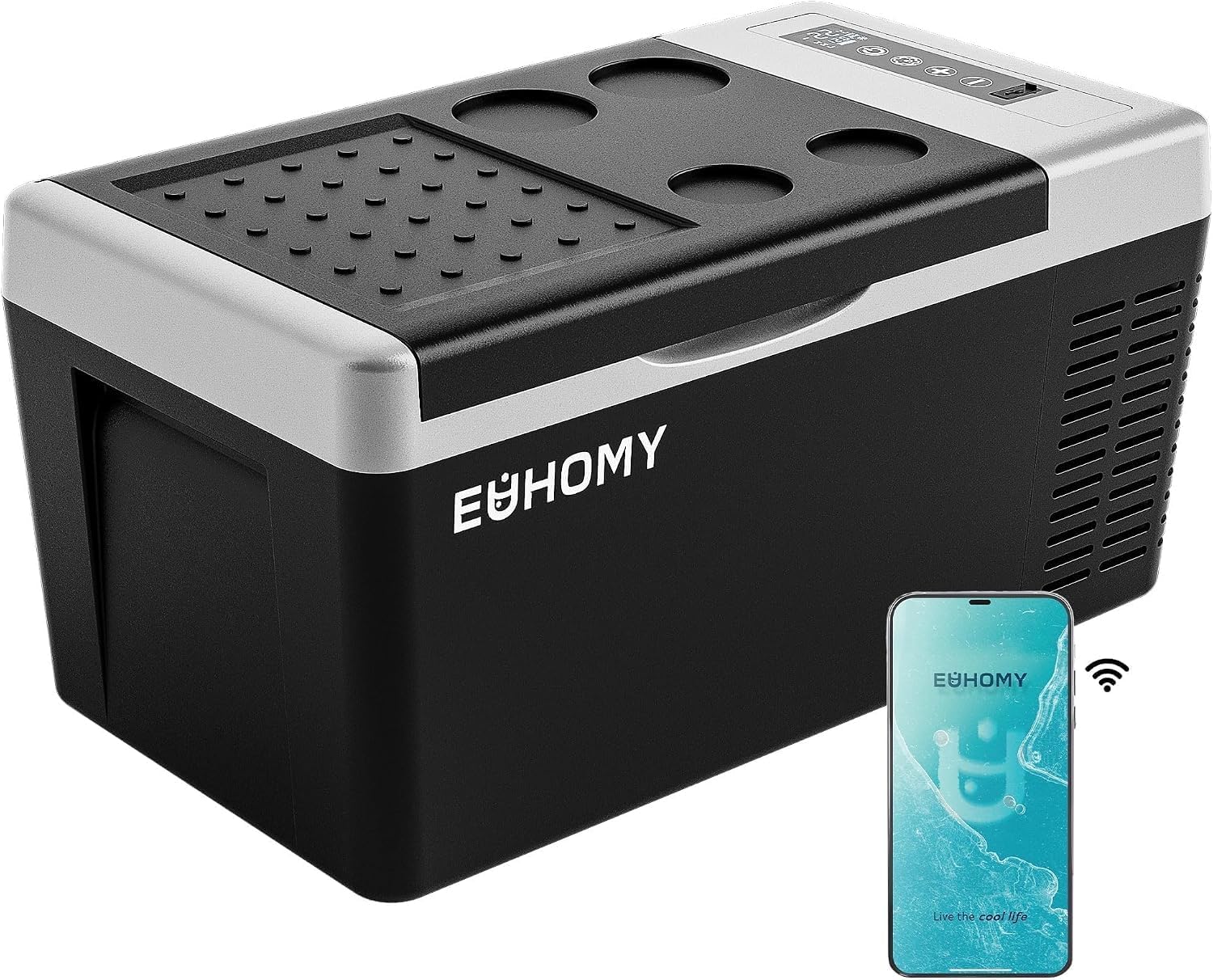
The ice-free pick: EUHOMY 19QT 12 Volt Refrigerator, -4℉~68℉ Electric Cooler for Car
 Visit on Amazon →
Nineteen quarts, and it runs off a 12 volt socket instead of a bag of ice. The temperature range is the whole story: at the cold end it works like a freezer, and at the warm end it is a fridge for drinks, produce, and lunch meat. No meltwater, no soggy bread, no Saturday morning run to the gas station for another bag of cubes.
For a fishing guide the appeal is obvious. I can put fillets in it and stop doing math about whether the ice survives to Sunday. It also solves the problem no ice chest solves, which is that ice takes up half the space you paid for.
Two caveats worth saying out loud. First, it needs power. A 12 volt outlet in the truck or on the boat is the point of the thing, and when the power stops, the cooling stops. Second, nineteen quarts is a weekend box for two people, not a seven-day box for a family of five. Check current Amazon price before you build a trip around it.
Flaws but not dealbreakers: It is not a rotomolded bear box and it does not pretend to be. Treat it like a small appliance that rides in the cab, not a chest you shove down a rocky bank.
Anyone who drives to the water and has a 12 volt outlet within reach will get more out of this than out of any bag of ice.
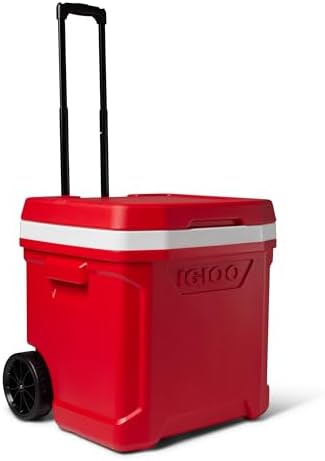
The dock pick: Igloo Hard Coolers | Profile II Series | Insulated Ice Chests | Roller Cooler with Wheels
 Visit on Amazon →
The wheels are the feature, and I mean that as a compliment. A cooler you cannot move when it is full is a dock ornament, and I have watched grown men try to wrestle a loaded chest across a gravel lot at 5 AM. Roll it instead. Load it in the truck bed, roll it to the dock, roll it back to the cleaning station.
This is a hard-sided insulated chest, which means it plays by the ice rules below. It is not going to hold a weekend on a single bag of cubes, and nobody should expect it to. Pack it right and it does the job it was built for: keeping drinks and the day's catch cold from the ramp to the cabin.
One thing to plan around. Wheels are wonderful on pavement, docks, and boat ramps, and miserable in loose sand or over rocky shore. If your access is a soft beach, carry it by the handles instead of dragging it.
Flaws but not dealbreakers: A roller is still a hard cooler, so all the discipline in the next section applies. No gasket, no latches, no ice. Check current Amazon price and compare it against what you would spend on ice over a season.
Anyone who parks near the water and wants one box that moves without help will be happy with this.
If you have power, run both. The 12 volt unit carries the food that cannot get wet, and the Igloo carries drinks and ice. Two boxes, two jobs, and the main lid stays shut.
The actual packing workflow
This works with any hard cooler and any ice you can buy or freeze. It is the same sequence I run before every charter, and it is the part that actually saves the trip.
Step one: Pre-chill the box. The night before, put a bag of ice or a few frozen jugs in an empty cooler and close the lid. A warm box eats your first ten pounds of ice just getting the walls cold. You paid for that ice. Do not donate it to the plastic.
Step two: Freeze your own blocks. Milk jugs, juice bottles, whatever fits. Block ice melts slower than cubes because it has less surface area exposed to air. Cubes are for cooling things fast. Blocks are for still being there on Sunday.
Step three: Chill everything before it goes in. Warm drinks and room-temperature food are heat sources. If it can go in the fridge overnight, it goes in the fridge overnight. Frozen meat goes in frozen, not thawed.
Step four: Pack in layers. Block ice on the bottom. Food in the middle, in waterproof containers or sealed bags, because everything eventually sits in meltwater. Cubed ice on top, where it can drop cold air down through the load.
Step five: Leave the drain plug closed. That meltwater is a cold bath, and it is doing work. Drain it at the end of the trip, not every morning. Test the plug at home first, in the bathtub, before you trust it with a weekend.
Step six: Use a second cooler for drinks. This is the single biggest upgrade you can make, and it costs nothing if you already own a small box. Drinks are the reason people open the main lid, and every open is cold air leaving.
Step seven: Shade and a wet towel. Sun on the lid is heat you paid to remove. Keep the box out of direct sun, and a damp towel over the top adds a little evaporative cooling for free.
Step eight: Check the gasket. Close the lid on a dollar bill and try to slide it out. If it pulls free with no drag, the seal is weak and the box is lying to you about its ice life. A warped gasket is the whole game.
Step nine: Know where things are. Repack so the things you grab most are on top. A cooler is opened less when the answer to "where are the sandwiches" is obvious.
The competition and why it lost
The big rotomolded chests earn their reputation. They are built like a truck bed, the hinges are bombproof, and if you are camping, tailgating, or running multi-day trips more than ten days a year, that construction is worth the money. They are also heavy, expensive, and enormous, and none of that helps when you are rolling a box twenty yards to a dock at dawn.
Soft-sided coolers are the other direction. They are light and easy to carry, and they are fine for a lunch and a six-pack on a day trip. For a three-day trip with a client's catch in it, they are not in the conversation.
A plain budget chest without a gasket that seals clean is not in the conversation either. The claim on the lid is marketing. The ice log is the truth.
That is why these two made the cut. One removes ice from the equation entirely if you have a 12 volt outlet. The other moves itself when it is full, which is more than most chests can say.
What this all costs
- EUHOMY 19QT 12 Volt Refrigerator, -4℉~68℉ Electric Cooler for Car: Check current Amazon price.
- Igloo Hard Coolers | Profile II Series | Insulated Ice Chests | Roller Cooler with Wheels: Check current Amazon price.
- Block ice and frozen jugs: whatever your freezer and a few water bottles cost you.
- A second small cooler for drinks: whatever you already have in the garage.
Run the math over a season rather than a trip. If you are buying ice every weekend from May through October, the 12 volt unit starts looking less like a gadget and more like a tool, especially when you count the gas station runs and the food you throw away because it got wet.
The packing routine costs nothing and it is the part that decides whether Sunday's ice is still ice. Do it once properly, keep the same order every trip, and you stop thinking about the cooler at all. That is the goal. A cooler is a promise, and the routine is how you keep it.