I have been guiding on Lake Superior for fifteen years, and in that time I have watched more good fish turn bad in cheap boxes than I care to remember. A cooler is a promise, and most of them lie. So I stopped shopping by the sticker on the lid and started shopping by one question: what is still frozen on Sunday morning? This is the cooler dry storage setup I actually run, compared four ways. Two of these items make cold. Two of them keep your food out of the water that cold turns into.
Related: Rotomolded vs Injection-Molded Coolers: What the Ice Log Shows
The short answer for most people in 2026: buy the hard-sided box you can honestly lift when it is full, then spend what is left on a dry-storage layer inside it. A small soft cooler earns its place as a day bag, not as the box your weekend depends on. And the two inserts here cost less together than a tank of gas, which is exactly why they belong in the same conversation as the coolers themselves.
One thing before we start, because it matters more than any spec table. I have not logged a 72-hour ice test on these four specific units. My rule is that nothing gets a recommendation from me until it has run Thursday 6 a.m. to Sunday 6 a.m. with 20 pounds of ice and a temperature log, and I am not going to pretend otherwise. What I can do is tell you what each item is built to do, what the listing claims, and what I would check before I trusted it with a client's catch.
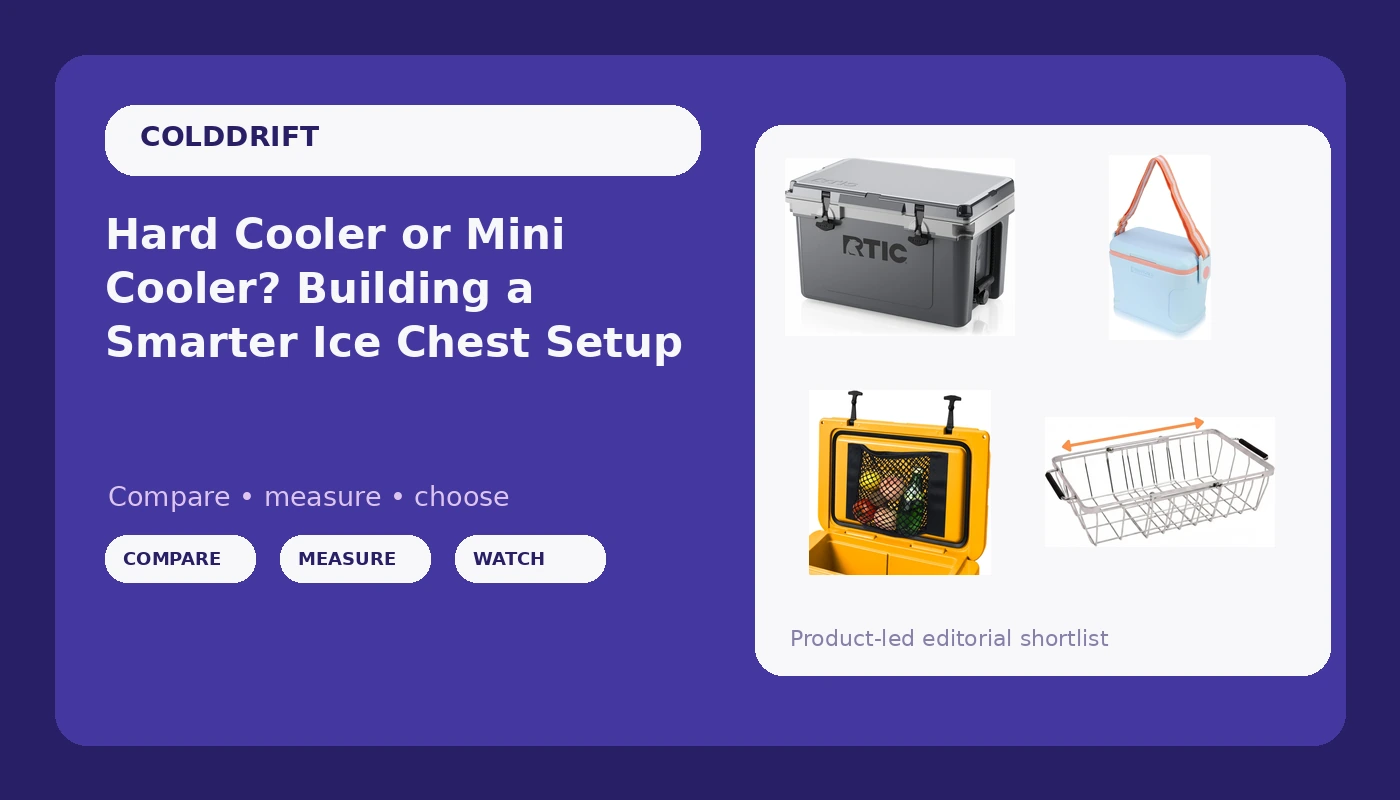
RTIC 32 QT Ultra-Light Hard Cooler
Hard-sided box in a size one person can actually move, and the light build is the whole point of a 32 quart
Not a rotomolded tank, so no bear-proof claims and no ice-log number until it earns one
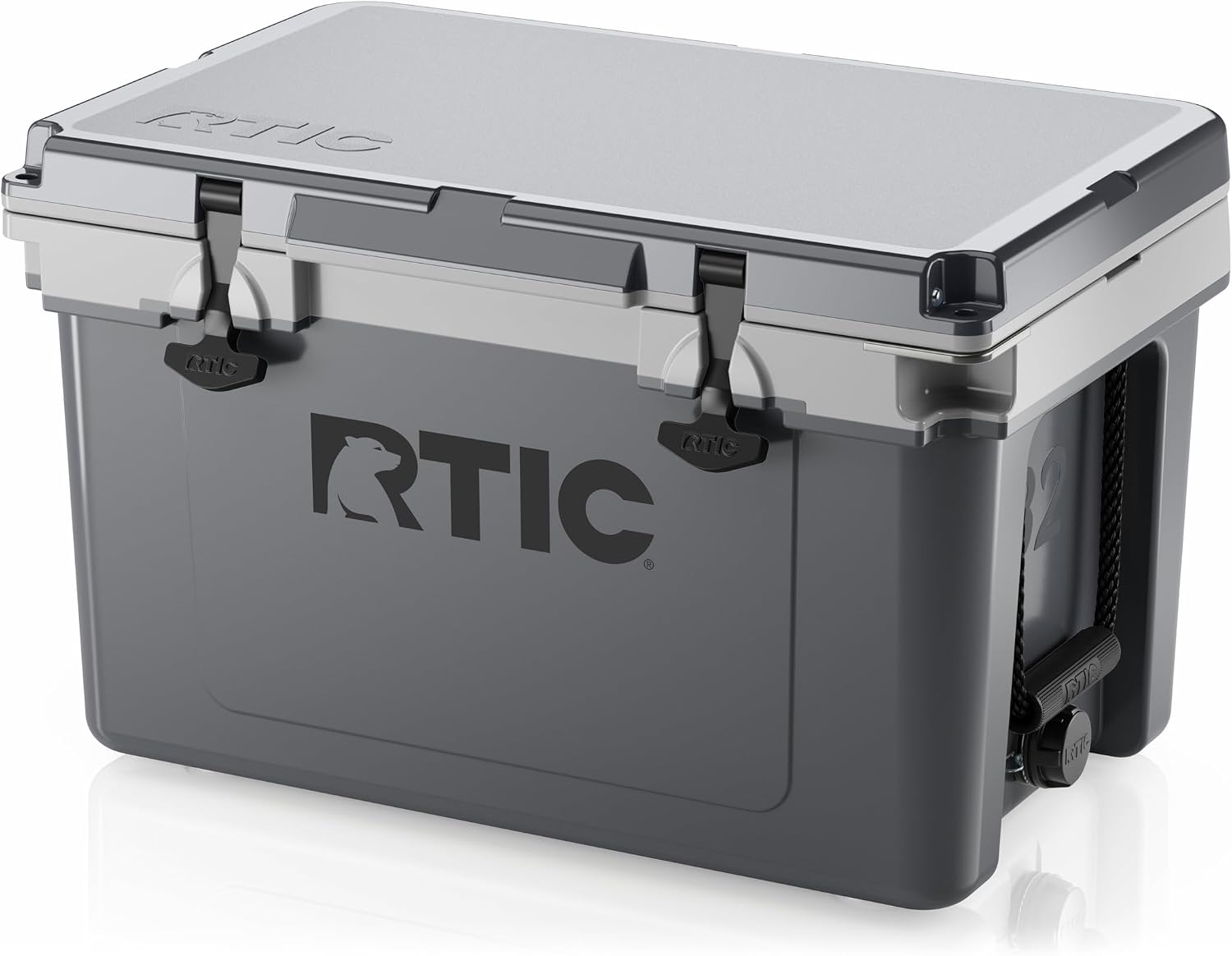
Pinnacle 8.5Qt Mini Cooler, 14 x 7.6 x 10.6In Ice Box with Smart Divider, Locking Lid, Adjustable Shoulder Strap, Insulated Picnic Basket Beach Cooler Bag, 36- Hour Ice Retention, Stylish Colors
8.5 quarts is a lunch, not a fish box, and a soft bag's seal is not a hard cooler's gasket
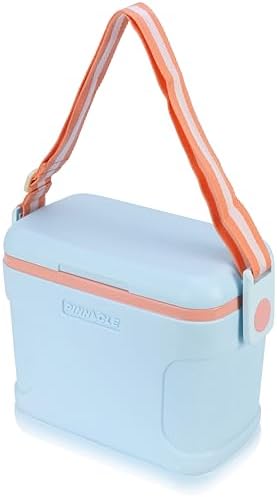
2PCS Cooler Net for Dry Storage, Fits Most Coolers, Compatible with Yeti, Coleman, Igloo, Lifetime, Pelican, Canyon, Strong & Elastic
"Fits most" is not "fits yours," and a net holds less than a rigid tray
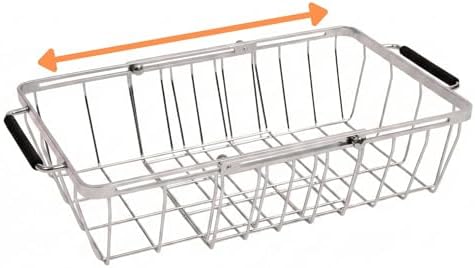
Adjustable Cooler Basket - Expands 11.75" to 18.5" - Non-Slip Rubber Handles, Universal Insert for Full Size Ice Chests, Dry Goods Tray Cooler Accessory - Fits Igloo, Coleman, Lifetime, Pelican, More
It eats interior volume, and it is built for full size chests, not small boxes
Prices and availability were captured from Amazon Creators API and may change.
How I judge cooler gear
Everything I care about comes down to three parts: the gasket, the latches, and the drain plug. Ice retention is the only spec that matters, and everything else is a handle and a hinge.
The gasket is the whole game. A gasket that seats clean and cold is a cooler that tells you the truth. A warped one is a cooler that lies to you for two days and then ruins a hundred dollars of food. When any box arrives, close the lid on a dollar bill and pull. If the bill slides out without drag, the seal is not sealing, and no amount of ice fixes that.
Latches are the second thing. Rubber straps survive a rough road. Plastic clips pop. I have watched a latch let go on a washboard Forest Service road and turn a full box into a puddle of ice water by the time we reached the landing.
The drain plug is a feature right up until it leaks. Test yours in the driveway, with water, not on the boat, with fish. I learned that one the hard way and lost most of a day of ice to it.
That is the list. Everything below is judged against it, and I am flagging plainly what still needs the log before I would call it proven.
The hard box: RTIC 32 QT Ultra-Light Hard Cooler
This is the anchor of the whole setup. A 32 quart hard-sided box is the size where a cooler stops being a lunch box and starts being trip equipment, and it is still small enough that one person can get it off a tailgate without help. My rule on sizing has never changed: a cooler you cannot lift when it is full is a dock ornament. If you fish solo, or fish with one partner and pack honestly, 32 quarts is the sweet spot between cold mass and a hernia.
The "ultra-light" part of the name is doing real work here. Hard-sided coolers get heavy in two ways: the insulation and the shell. A lighter build in this size class means you are more likely to actually carry it to the boat instead of leaving it in the truck, and a cooler that stays in the truck keeps nothing cold.
What it is not is a rotomolded tank. Rotomolding is worth the money if you fish, camp, or tailgate more than ten days a year, and I say that without hesitation. But it also means more weight and more cash, and if your trips are day trips, the extra shell thickness buys you durability you may never need. Do not let anyone sell you a bear-proof claim on an injection-molded box. That is a different product at a different price.
The day bag: Pinnacle 8.5Qt Mini Cooler
Read the full name and you have the whole feature list: 14 x 7.6 x 10.6 inches, 8.5 quarts, a smart divider, a locking lid, an adjustable shoulder strap, and a listed 36-hour ice retention figure. This is the cooler that lives in my truck between trips, and it is the one I hand to somebody heading to a picnic or a beach because it does not require a plan.
The divider is the feature I would keep if I could only keep one. Splitting the interior means the sandwiches stop swimming in the melt water from the drinks, which sounds like a small thing until you have eaten a soggy sandwich on a hot dock. The locking lid matters for a different reason: a bag that pops open in the back seat is a bag full of warm water by the time you park.
The shoulder strap is the quiet win. Hands-free carry down a dock, across a beach, or up a trail is worth more than a few degrees of insulation, because the bag you leave in the car is not cooling anything.
Now the honest part. I do not buy any ice claim without a log, and this one is no exception. A small bag has far less cold mass than a 32 quart hard box, which means every lid opening costs it more. My expectation, based on how these bags behave in general, is that it comfortably handles a day trip if you pre-chill it and keep it shut, and that a "36-hour" figure assumes you are not opening it every twenty minutes. Plan on a day. Be pleased if you get more.
And say it plainly: this is not a fish box. 8.5 quarts holds lunch, drinks, and a bag of ice. It does not hold your limit.
The dry layer: net and basket
Here is the part most people skip, and it is the part that saves the trip. Ice melts. That is not a defect, that is physics. The question is whether the melt water reaches your bread, your paper towels, your phone, and your dry socks. Two cheap accessories answer that question.
The 2PCS Cooler Net for Dry Storage is the low-cost version. Two elastic nets, listed as compatible with Yeti, Coleman, Igloo, Lifetime, Pelican, and Canyon, strong and elastic. You stretch one across the interior and it holds light dry goods up above the waterline. Two nets means one for the box and one for the boat bag. At this price, it is the cheapest insurance in the whole setup.
The Adjustable Cooler Basket is the rigid version. It expands from 11.75 inches to 18.5 inches, which is the number that matters, because a fixed tray either fits your chest or it does not and there is no arguing with plastic. The non-slip rubber handles keep it from skating around when the box is half empty, and it gives you a real shelf for dry goods rather than a stretched pocket. It is listed for full size ice chests and names Igloo, Coleman, Lifetime, and Pelican among the fits.
Both of these are worth owning, and they are not the same product. The net is for light, soft items and for boxes where you want zero lost volume. The basket is for a full size chest where you want to stack real food above the ice and still get to it without digging. If you run one hard box and one day bag, buy the net for the bag and the basket for the box.
Measure your interior before either one arrives. "Fits most coolers" is a marketing sentence, and your cooler is a specific cooler.
The trade-offs nobody puts on the box
First, hard versus soft. A hard-sided box holds cold longer because it has more insulation and a rigid, gasketed lid that seals under its own weight. A soft bag carries better and weighs nothing empty. You do not have to choose, but you do have to be honest about which one your trip actually needs. A weekend that depends on ice wants the hard box. A two-hour picnic wants the bag.
Second, dry storage costs interior volume. Every basket and net you add takes up space that ice or food could have used. That is a real trade, and it is why I would put a basket in a full size chest and a net in a small one. Fill the small box with a rigid tray and you have a tray with a little ice around it.
Third, accessories are the cheapest part of the system and the easiest to get wrong. Eight and a half dollars for nets and about the price of a decent lunch for the basket is nothing next to the cost of a hard cooler, but only if they fit. Non-universal "universal" accessories are how people end up with a tray rattling in a drawer.
Fourth, and this is the one that matters most: the ice claim on any listing is a claim, not a measurement. A temperature log is a measurement. I have run enough of them to know that real-world opening, sun, and a hot boat deck cut listed numbers down hard. Buy the box that seals, and treat the retention figure as the ceiling, not the floor.
Which setup for which trip
For a solo day on the water, the RTIC 32 QT plus the cooler net is the whole kit. The net keeps your lunch and your dry layers above the melt, and the box is small enough to move alone at the ramp.
For a two-person weekend, run the 32 QT with the adjustable basket inside and the net as backup. Basket on top, ice below, food stays dry and reachable, and you are not unpacking the entire box to find the coffee.
For a tailgate, a picnic, or a beach day, the Pinnacle mini cooler with a net is the right answer. Warm, practical, no ceremony. You do not need a bear-proof box. You need one that keeps the potato salad honest on a hot day, and a bag you can carry with one hand while holding a folding chair in the other is the one that actually goes.
For a boat deck that gets abused, hard box only, accessories optional. Salt, sun, and a bouncing deck are where a gasket either holds or gives up, and that is the trip where I would want the shell that takes a hit.
What I check before I buy anything
Close the lid on a dollar bill and pull. If it slides free, walk away. Open and close every latch twice and picture it doing that a thousand times on a rough road. Pull the drain plug, look at the seal, and decide whether you would trust it with a full box in a boat. Lift the box with one hand if you can, and if you cannot, ask yourself who is going to lift it when it is full of ice and fish.
And one more, from a man who has strong feelings: if it has cupholders, it is a lunch box. Buy it for lunch and stop expecting it to be a cooler.
The bottom line
Build the setup, not the purchase. A hard-sided box you can lift, a small bag for the short trips, and a dry layer inside each one will beat a single expensive cooler with nothing in it but ice and regret. The RTIC 32 QT is the anchor, the Pinnacle mini is the day bag, and the net and the adjustable basket are the cheap parts that decide whether your food stays edible.
Everything else is a handle and a hinge. Test the gasket, test the latches, test the drain plug, and check the ice on Sunday morning. That is the only review that counts.