Cooler ice retention is the only spec that survives contact with a real trip. Handles loosen, hinges rust, cupholders collect sunscreen and sand, but the question that decides whether Saturday's dinner is still dinner is simpler than all of that: how much ice is left, and how cold is the food sitting next to it. Everything else is packaging. That is exactly why cooler shopping gets confusing so fast. Boxes advertise multi-day performance, listings use words like "extreme" and "premium," and the cooler already in your garage has a gasket that quietly stopped sealing two summers ago.
This explainer walks through what actually drives ice retention, how the four options below differ in construction and role, and how to match a cooler to the trip you really take instead of the trip the marketing photos were shot on. No invented lab numbers and no price predictions. Just the mechanics, the trade-offs, and where each of these four fits.
Related: How to Pack a Cooler So the Ice Lasts Three Days →
Quick answer
Ice retention comes down to three things: how much insulation surrounds the cold space, how well the lid gasket seals, and how much cold mass you put inside to begin with. A hard-sided cooler with thick walls and a clean sealing gasket will hold ice longer than a soft-sided bag of similar volume, and a soft-sided cooler you actually carry beats a hard cooler you left in the truck because it was too heavy. Reusable ice packs extend the cold chain in both formats, and they matter most in small coolers where loose cubes melt quickly. Choose the format that fits the trip, then fill it completely and keep the lid shut.
Four useful options
| Model | Best fit | What stands out |
|---|---|---|
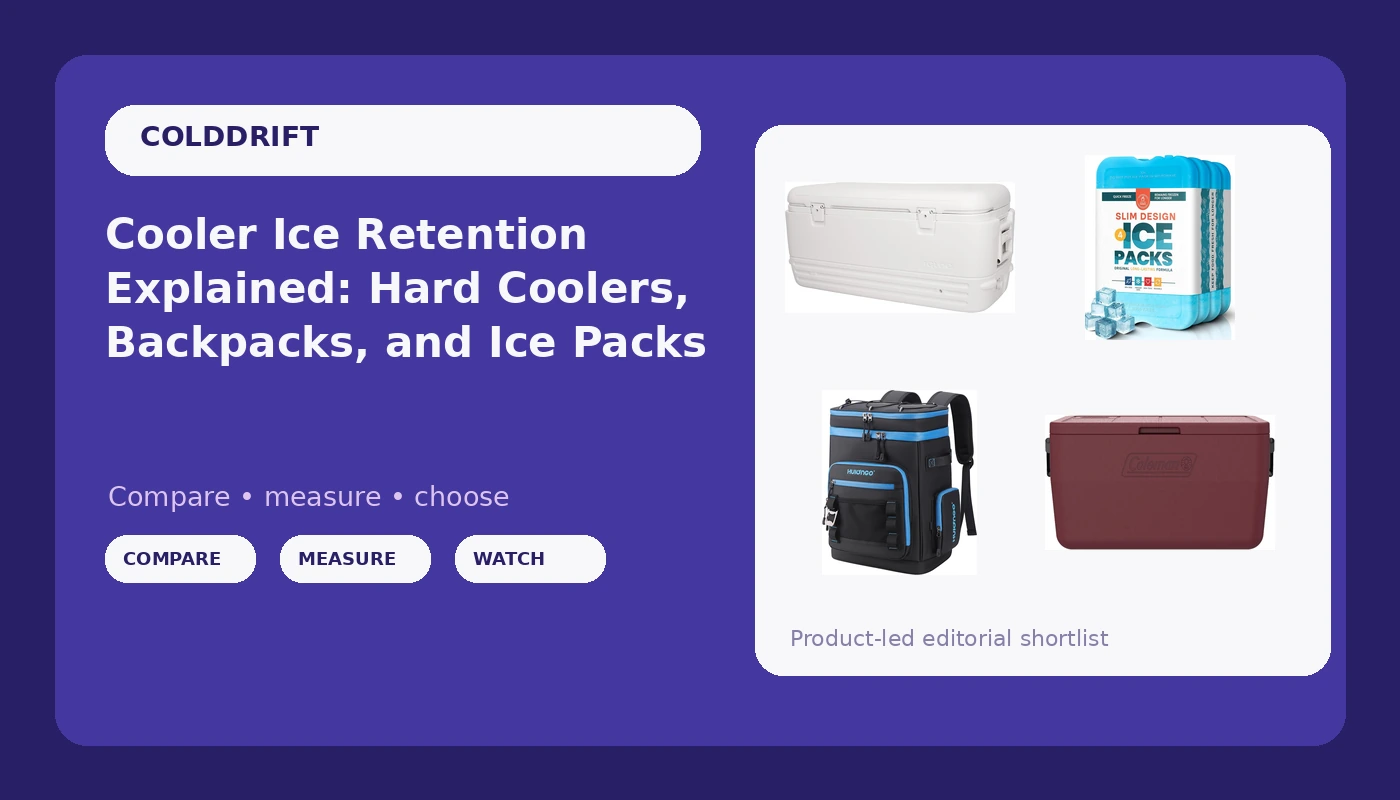
| Igloo Hard Cooler, Polar and Party Bar Series, Insulated Ice Chests | Base camp, boat, tailgate | Hard-sided insulated ice chest sold across the Polar and Party Bar series |
| Coleman Chiller Cooler, available in 9, 16, 30, 48, and 60 quart sizes | Budget hard-sided trips of different sizes | Size range from 9 to 60 quarts, described as leak resistant with ice retention |
| Hulongo Large Waterproof Insulated Cooler Backpack, 30L, 48 Cans | Carrying cold on foot | Soft-sided 30L pack described as waterproof and insulated, rated for 48 cans |
| Healthy Packers Ice Packs for Lunch Boxes and Coolers | Small coolers and lunch boxes | Slim, reusable freezer packs built for coolers and lunch boxes |
The hard-sided base camp: Igloo Hard Cooler
A hard-sided chest is the format to reach for when the cooler has a home base: a picnic table, a boat deck, a tailgate, a cabin counter. The rigid walls hold their shape when the cooler is loaded, the lid stays aligned because it is hinged to a stiff body, and meltwater collects at the bottom where a drain can deal with it. Those are the structural advantages that make ice last.
The trade-offs are equally structural. A full hard cooler is heavy, and weight goes up fast with size, which is why the honest move is to buy the volume you will actually fill rather than the volume that looks impressive on the shelf. The other thing to inspect is the gasket. A lid seal that is warped, dirty, or pinched is a cooler that lies to you, and it is the single most common reason a chest that performed well last season fails this season. Wipe the seal, check that it sits evenly all the way around, and confirm the drain plug seats before you leave.
The budget workhorse: Coleman Chiller Cooler
The interesting thing about this line is the size spread, not a single headline number. A 9 or 16 quart box is a lunch and drinks cooler for two people. A 30 quart is a solid day-trip size for a family. The 48 and 60 quart versions are the ones that make sense for a weekend of camping or a full day at a concert lot where you are feeding a group. Buying the right size for the job is worth more than any label, because an oversized cooler that you leave half empty melts its ice faster than a full one.
The honest trade-off with coolers in this class is construction. Injection-molded coolers like these generally use thinner foam walls than premium rotomolded boxes, so the gap between a budget chest and a heavy-duty one shows up in how many days you get, not in whether the cooler works on day one. For day trips, tailgates, and one-night camps, that difference is often irrelevant. For a three-day trip in August sun, it matters. If you want the leak-resistant claim to hold up, treat the lid, gasket, and drain as service items and check them before every trip.
The carry-it-in option: Hulongo Cooler Backpack
This is the format for the walk in: the beach path, the hike to a fishing spot, the festival where you park a mile away, the paddle where you have two hands full of gear. Thirty liters is a real amount of volume, and the pack format distributes that weight across your shoulders instead of hanging it off one arm. Waterproof construction matters here too, because a soft pack sits on the ground and against wet gear in ways a hard chest usually does not.
What you give up is insulation depth. Soft walls simply cannot hold the foam thickness of a rigid chest, so a backpack cooler is a day-trip tool rather than a three-day ice locker. That is not a flaw, it is the physics of the category. Get the most out of it by starting with everything already cold, using ice packs rather than loose cubes so meltwater does not soak your food, packing the bag tight so there is little air space, and keeping it in the shade when you set it down.
The cold-chain extender: Healthy Packers Ice Packs
Ice packs are not glamorous, but they solve the two problems loose ice creates: meltwater and inconsistency. A slim reusable pack goes into a lunch box or a small backpack cooler without turning your sandwiches into a swimming pool, and because it is reusable, you are not buying ice every single trip. In a soft-sided cooler, packs also spread cold more evenly against the walls than a pile of cubes does.
The trade-offs are volume and freezer space. Every pack you add is space that food cannot use, so a small cooler fills up fast, and a stack of packs takes up room in the freezer between trips. Plan for that by pre-freezing packs a full day ahead, using them to line the walls and the bottom of the cooler, and reserving the center for food. In a large hard chest, packs are best treated as a supplement to block ice rather than a replacement for it.
Prices and availability may change. Product images, names, and retailer links must be matched by verified ASIN. Do not state a current price, rating, stock status, or measured result without current evidence.
How ice retention actually works
Three variables decide how long your ice lasts, and only one of them is the cooler's fault.
The first is insulation. Cold escapes through walls, and thicker foam slows that escape. Rotomolded coolers, which are molded as a single seamless piece, generally carry thicker insulation and a more rigid body than injection-molded coolers, which is why they cost more and weigh more. Neither construction is magic. Both are just foam and plastic arranged differently.
The second is the seal. A gasket is a rubber ring that closes the gap between lid and body. When it sits clean and even, cold air stays in and warm air stays out. When it is warped, gritty, or pinched, the cooler breathes, and no amount of wall thickness saves it. This is why a ten-year-old chest with a fresh gasket can outperform a newer box with a bad one.
The third is cold mass and how you use it. Ice melts in proportion to exposed surface area, so one large block outlasts the same weight in small cubes. Air space is the enemy, because every empty corner is warm air that has to be chilled. And every time you open the lid, you trade the cold air sitting at the top for whatever the day outside is doing. Fill the cooler, pre-chill what goes in, and open it with a plan.
Matching the cooler to the trip: a five-step method
- Count the days and the meals you are actually covering, not the maximum the cooler could theoretically handle.
- Estimate volume honestly, including ice and ice packs. Ice takes up real space, often a third of the box.
- Decide whether the cooler stays in one place or travels on your back. That single question eliminates half the options.
- Inspect the gasket, latches, and drain plug before loading anything. Fix or clean what needs it at home, not at the trailhead.
- Pre-chill the cooler and the food, pack it tight, and put the slowest-melting cold mass in first.
Practical guidance
- Pre-chill the cooler with a bag of ice the night before a big trip, then dump the meltwater before loading.
- Keep the cooler out of direct sun and off hot surfaces. A blanket over a hard chest in a truck bed helps more than people expect.
- Use block ice or reusable packs for longer trips and reserve cubes for drinks you will pull out early.
- Keep the lid closed. Group what you need, open once, close it, and let the cold air settle back down.
- Check the drain plug before every trip, and keep a spare in the vehicle if the plug is a screw-in type.
- Label anything that will be eaten raw, and keep it away from the meltwater at the bottom.
Which option should you choose?
Choose the Igloo Hard Cooler when the cooler lives at a base camp, on a boat, or on a tailgate and you want a rigid chest with a hinged lid and a drain. Choose the Coleman Chiller Cooler when you want to match the box to the trip, from a 9 quart lunch run to a 60 quart group weekend, and you are comfortable with a budget-class build. Choose the Hulongo Cooler Backpack when you have to carry the cold on your own two feet and 30 liters is enough for the day. Choose the Healthy Packers Ice Packs when your cooler is small, your food cannot get wet, or you want to extend the cold chain without buying ice every trip.
There is no universal winner here, and anyone who tells you otherwise is selling something. Hard-sided and soft-sided coolers are different tools with different jobs, and the same person often needs both. The one thing worth being strict about is the seal. Whatever you buy, check the gasket, test the drain, and confirm the latches hold before the cooler is full of food you care about.
The bottom line
Ice retention is a product of insulation thickness, a clean sealing gasket, and how much cold mass you pack into a full cooler. Hard-sided chests like the Igloo Polar and Party Bar series and the Coleman Chiller line win on capacity and rigidity, with the Coleman line offering a wide size range for matching the box to the trip. The Hulongo backpack trades insulation depth for the ability to carry cold on foot. Ice packs from Healthy Packers are the cheapest way to buy extra hours in any of them, especially small coolers where loose ice disappears first. Buy the format that matches how you travel, size it honestly, and maintain the seal. That is the whole game.