I have been guiding on Lake Superior for fifteen years, and the same argument shows up on the dock every July: pay up for rotomolded, or buy the cheap box and spend the difference on gas and bait? This Coleman vs EchoSmile cooler comparison is the version of that conversation I have with clients before they hand over money. It is not a spec sheet recital. It is the part of cooler shopping that decides whether your limit of walleye is still cold on Sunday morning or whether you are driving home with a warm, sad smell and a story about how the ice "just went fast."
I have watched coolers fail on clients. I have watched a box that promised five days of ice give up somewhere around hour thirty in a truck bed in direct sun. So I do not care much about the language on the lid. I care about construction, the gasket, the latches, the drain plug, and how much ice is left after seventy-two hours of real use with real food and a lid that opens like a normal person opens a lid.
My short answer: if you fish, camp, or tailgate more than ten days a year, the EchoSmile rotomolded cooler is the one worth the money, and the Coleman Classic Series is the budget pick that makes sense for drinks, day trips, and overflow capacity. That is the whole argument in one line. The rest of this article is why, plus the parts of cooler shopping that the product copy never mentions.
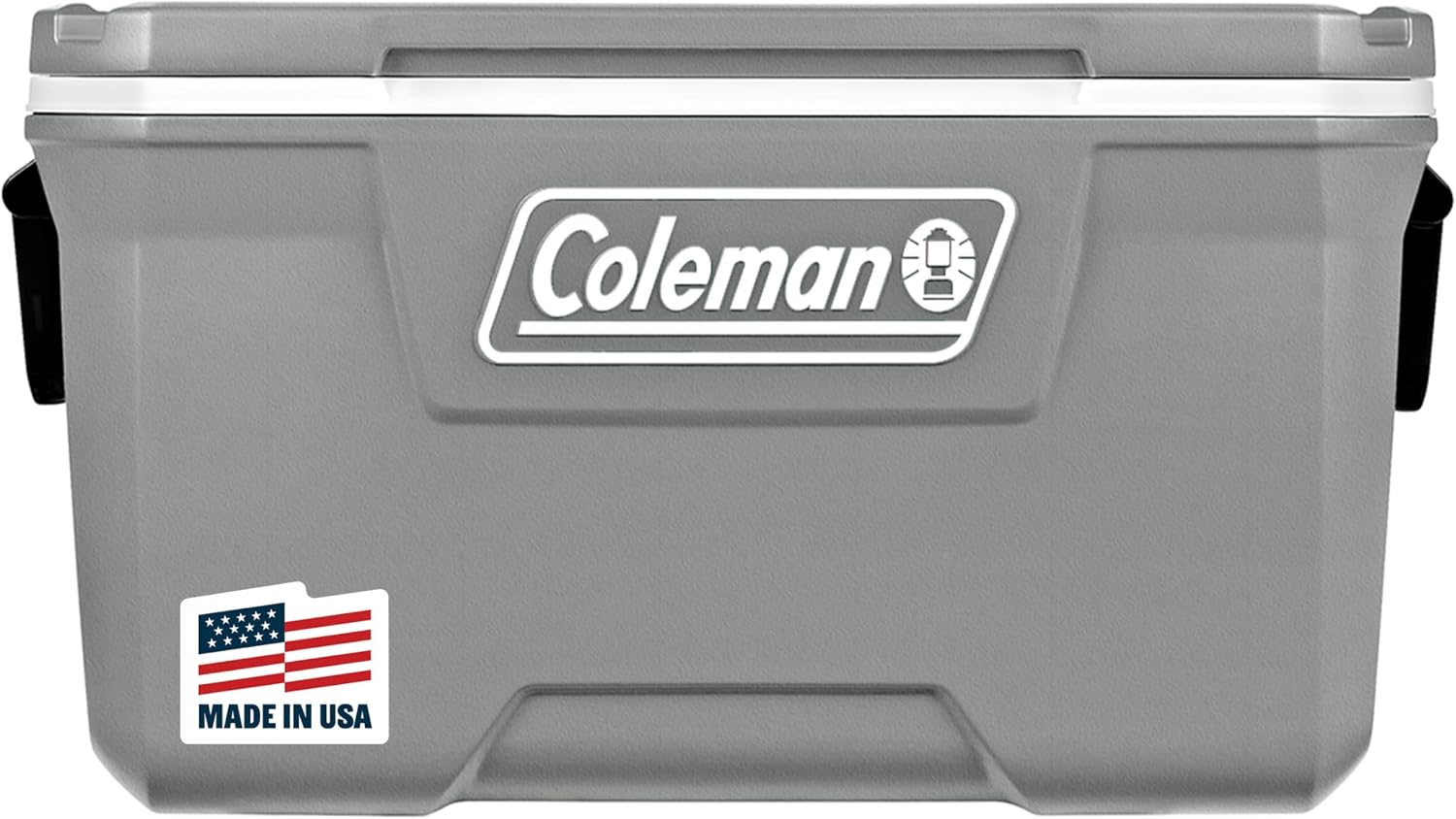
Coleman Classic Series Insulated Portable Cooler
Cheapest way to get serious capacity, light enough to move by yourself, fine for day trips and drinks
Injection-molded walls and a thin lid, so the multi-day ice claim is optimistic in real summer heat
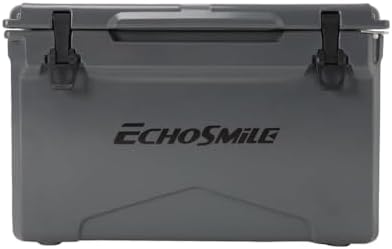
EchoSmile Rotomolded Cooler (listing A, 25 to 75 quart line)
One-piece rotomolded shell and a real lid gasket, which is where ice retention actually comes from
Heavy once it is full of ice and fish, and the title covers a whole size range, so confirm the capacity
EchoSmile Rotomolded Cooler (listing B, 25 to 75 quart line)
Same rotomolded build as the others, so the only real decision left is capacity
A big box needs more ice to fill the dead space, so oversizing costs you at the ice house
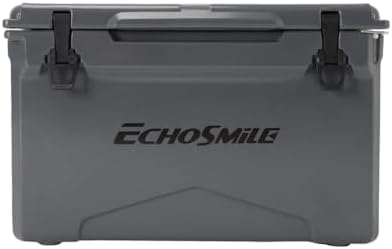
EchoSmile Rotomolded Cooler (listing C, 25 to 75 quart line)
Rotomolded construction plus a sealing lid that survives a rough road without popping
Not a bear-proof box just because the shell is tough; the latch and lid are a separate question
Prices and availability were captured from Amazon Creators API and may change.
How I judge a cooler, and what I will not claim
My test is boring and repeatable. Twenty pounds of ice, real food, a Thursday 6 a.m. start and a Sunday finish, with the lid opened the way a human opens it, which means more often than any manufacturer wants to admit. I log interior temperature and ice volume. I also run three checks that predict the result before the trip even starts.
The gasket check: run a finger around the lid seal and look for any warp, any gap, any spot where the rubber does not sit flush. A warped gasket is a cooler that lies to you. The bill test works too, closing the lid on a dollar bill and pulling; if it slides out with no resistance, air is moving through that spot.
The latch check: close it, then shake the box the way a rough two-track shakes it. Latches that pop open on washboard roads are worse than no latches, because you will trust them.
The drain plug check: fill the box, tip it, watch the plug. Drain plugs are a feature right up until they leak, and a leaking plug will cost you a day of ice. Test yours before the trip, not during.
I am not going to hand you measured ice numbers for boxes I have not logged a full season on. What I can do is tell you which construction and which features predict the outcome, and which numbers on the label are marketing.
The budget pick: Coleman Classic Series
The Coleman Classic Series is the injection-molded option here, and it is offered across a wide spread of sizes, from 52 quart up through 70, 120, and 150 quart. The label promises leak resistance and ice retention up to five days. Treat the "up to" as the load-bearing word in that sentence.
Injection molding is a different animal from rotational molding. The walls are thinner, the lid is lighter, and the seams and hardware are built to a price. That does not make it a bad cooler. It makes it a cooler with a narrower job description. Pre-chill it with a bag of ice the night before, use block ice instead of cubes, keep it in the shade, do not open it every twenty minutes, and you can get a couple of days of genuinely usable ice out of it in a northern summer. Put it in a black truck bed in full July sun and open it like a drink cooler, and the five-day claim dies well before day two.
Where it wins is cost per quart and weight. A large Coleman gives you real capacity for tailgates, picnics, and floating as a second box next to your primary cooler. It is light enough that one person can move it loaded. That matters more than people think, because a cooler you cannot lift when full is a dock ornament.
Where it loses is everything that happens after year two. Thin lids flex. Hinges and latches are the first things to go. And if the model you are looking at has molded cupholders in the lid, understand what that signals: it was designed as a lunch box that holds drinks, not as cold storage for a client's catch.
The rotomolded pick: EchoSmile
Rotomolded means rotational molding: the shell is formed as a single seamless piece with uniform, thick walls. That single change is why premium coolers hold ice longer. A one-piece shell has no seams to leak cold air, the lid sits flatter because the tolerances are tighter, and there is enough rigidity in the walls to support a real gasket and heavy latches.
The EchoSmile listings here are all the same rotomolded cooler line, offered across a 25 to 75 quart range, which is why the three product titles read identically. That is not a trick, it is how the listings are built: one page per capacity option, with the title covering the whole family. So the practical move is simple. Decide what size you need, then buy the listing that corresponds to that size. If you are comparing the three, you are really comparing capacities, not builds.
The trade-offs are the same ones that come with every rotomolded box. Weight, first and worst. A loaded 60 or 75 quart rotomolded cooler is a two-person lift, and if you are hauling it down a bank to a boat alone, you will feel every pound of that thicker wall. Price is the second trade-off, and it is real. Third, a rotomolded shell is tough, but tough is not the same as bear-proof. Bear resistance lives in the latch and lid design, and I do not make that claim for any cooler without a latch test.
The gasket is the whole game
If you take one thing from this comparison, take this: the gasket matters more than the shell.
Ice does not disappear because the plastic is thin. It disappears because warm air gets in and cold air gets out, and the lid seal is where that happens. A rotomolded cooler with a warped gasket will lose to a cheap box with a clean seal. This is why I check the gasket first on any cooler, new or used, and why I tell people to store coolers with the lid cracked open rather than latched shut. Latching a damp cooler closed for six months in a garage is how you train the rubber to sit wrong.
On the Coleman, expect a basic lid seal that does its job when new and depends on the lid staying flat. On a rotomolded box, expect a thicker seal with more compression and a lid rigid enough to keep pressure even around the whole perimeter. Neither one is permanent. Both can be checked in thirty seconds.
Latches, hinges, and drain plugs
The Coleman uses the standard budget hardware: light latches and a hinge that will eventually be the reason you replace the box. It is fine for a picnic table. It is not fine for a boat deck in a chop.
The rotomolded boxes use heavier closure hardware, and that is most of why they survive rough roads. Rubber straps or thick rubber latches beat plastic clips every time on a trail, because they stretch instead of snapping and they hold tension even when the lid shifts.
Drain plugs deserve their own paragraph, because they are the most common point of failure on any cooler and the easiest thing in the world to test. A cooler with a leaking drain plug is a cooler with a slow, invisible problem. Every one of these boxes has a plug. Check yours in the driveway with water before it matters.
Size honesty: how many quarts you actually need
Rough guidance, not a measurement. A 25 to 35 quart box is a day cooler: lunch, drinks, a couple of fish. A 40 to 60 quart box is the weekend cooler for two to four people with real food. A 60 to 75 quart box is a multi-day camp or a big crew, and it is the size where weight becomes a genuine logistics problem.
The mistake I see most is buying for the trip you take once a year instead of the trips you take every weekend. A 75 quart box that lives in your garage is worse than a 45 quart box that goes fishing with you. Buy for the average trip, and add a cheap second cooler for overflow. That is exactly the role the Coleman plays best.
Who should buy which
Buy the Coleman Classic Series if you need capacity on a budget, if the cooler is mostly for drinks and day trips, if you want a second box for overflow on camping trips, or if one person has to move it alone.
Buy the EchoSmile rotomolded cooler if you fish or camp more than ten days a year, if you are keeping food or a catch cold for multiple days, if you want a gasket and latches that survive rough roads, or if you are tired of replacing a cheap box every other season.
FAQ
Do rotomolded coolers really hold ice longer? Yes, for structural reasons. One-piece walls, tighter lid fit, and a better gasket all slow the air exchange that melts your ice. The gap is biggest on multi-day trips.
Is a five-day ice claim realistic? It is realistic under ideal conditions: pre-chilled box, block ice, no sun, lid rarely opened. Real-world fishing trips are not ideal conditions. Plan for less and you will not be disappointed.
Do I need a drain plug? Yes, unless you enjoy tipping a forty-pound cooler full of meltwater over a dock. Just test it before the trip.
What I would do
If I were outfitting a boat tomorrow, I would put a rotomolded box in the 40 to 60 quart range in the bow and keep a large Coleman in the truck as the overflow and drink cooler. That combination covers a three-day trip without making me choose between cold fish and a cooler I can actually lift.
Ice retention is the only spec that matters. Everything else is a handle and a hinge. But handles and hinges are exactly what decide whether the box is still doing its job in year five, and that is where the money goes. Pick the size you will honestly use, check the gasket when it arrives, test the drain plug in the driveway, and you will get more cold out of either of these than the label promises.