I've guided on Lake Superior for fifteen years, which means I've loaded ice into a cooler on a lot of Thursday mornings and poured warm water out of one on a lot of Sunday afternoons. An insulated cooler comparison almost never comes down to brand loyalty. It comes down to three things: whether the lid gasket seals clean and cold, whether the latches survive a washboard road, and whether the box is the right size for the trip you are actually taking. Get those right and a modest cooler outperforms an expensive one that is too big to lift.
This comparison sets four cold-storage tools side by side: two hard-sided coolers from Igloo and Coleman, a leakproof soft bag from Maelstrom, and a 9L insulated lunch box from HOTOR. They are not interchangeable. Anyone who says they are has not watched a client's walleye go soft by noon on day two.
For a multi-day trip, the Coleman Classic Series is the cooler I would hand a friend, because it is the only one here built around bulk ice and long retention at a size one person can still manage. For a tailgate or an afternoon at the lake, the Maelstrom soft bag is easier to live with. For a work lunch, the HOTOR 9L is the honest answer. And if you want a hard cooler that doubles as a drink station, the Igloo Polar & Party Bar Series is the one on this list.
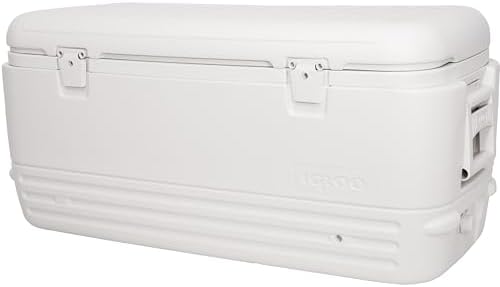
Igloo Hard Cooler, Polar & Party Bar Series
Rigid hard shell that doubles as a table or a bar, with a generous opening for group serving
A wide lid and constant access work against ice retention, and it is heavy once loaded
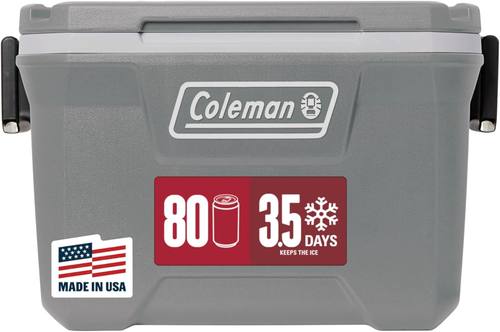
Coleman Classic Series Insulated Portable Cooler
Real bulk capacity across four sizes, leak-resistant hard shell, stacks and straps down
Not rotomolded, and the up-to-5-day ice claim is optimistic with the lid open in the sun
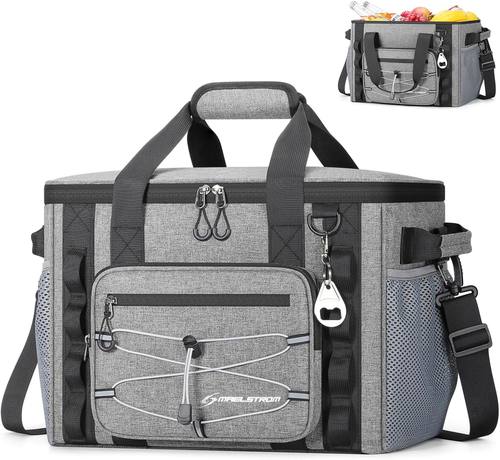
Maelstrom 30/40 Can Soft Cooler Bag
Light, leakproof, and genuinely carriable, so it goes where hard boxes cannot
Soft walls mean hours of ice life, not days
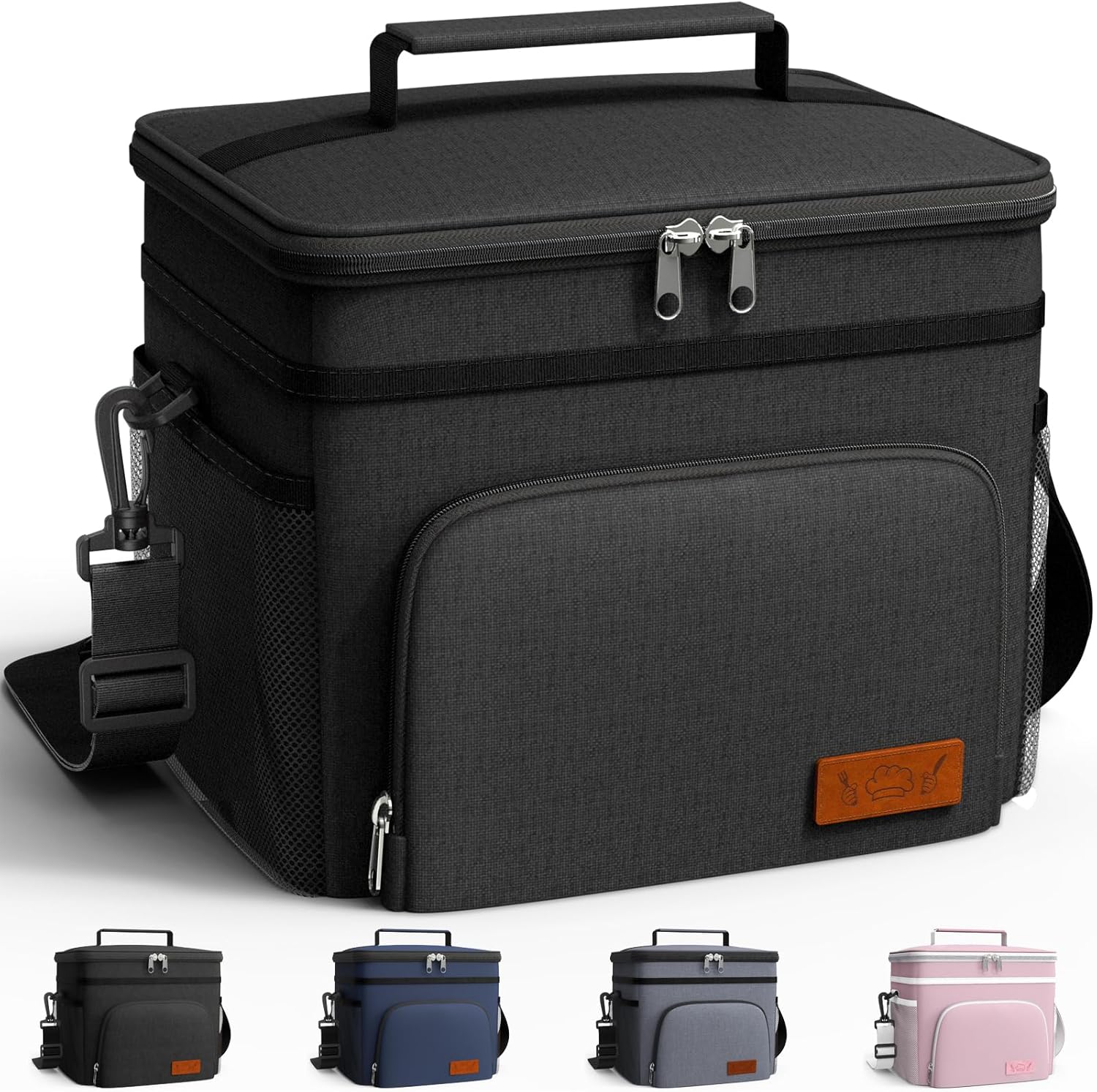
HOTOR Insulated Lunch Box, 9L
A leak-proof 9L bag that fits a desk, a backpack, or a boat console
Lunch capacity only, not built for a weekend of ice
Prices and availability were captured from Amazon Creators API and may change.
What the table actually tells you
Four products, four jobs. Two of these are coolers in the traditional sense: rigid walls, a drain plug, a lid you can sit on. One is a soft-sided bag that trades ice life for portability. One is a lunch box that happens to be insulated. Ranking them against each other on a single scale would be dishonest, so read the table as a set of trade-offs instead. Every row wins something and loses something.
The pattern is consistent: capacity and ice retention rise with rigidity, and portability falls. The cooler that holds the most ice is the one that will hurt your back when it is full. The bag you can sling over a shoulder is the one you will be refilling before dinner. Neither is a defect. They are different promises, and the trick is matching the promise to your Thursday.
Coleman Classic Series: the volume play
The Coleman Classic Series comes in 52, 70, 120, and 150 quart sizes, and Coleman advertises ice retention of up to 5 days. Treat that number the way I treat any manufacturer's ice claim: it is a closed-lid figure, not a boat-deck figure with a family opening it every twenty minutes. What the Classic Series genuinely delivers is volume and a leak-resistant hard shell that stacks, straps down, and survives being slid across a truck bed.
Where it wins: capacity, a range of sizes that lets you match the box to the trip, and a hard shell that does not care about a little gravel. The 52 and 70 quart versions cover most families. The 120 and 150 are for groups, long weekends, and people who have decided that ice is a bulk commodity.
Where it loses: it is not rotomolded, and it does not pretend to be. The walls are thinner than a premium box, the lid is not something I would stand on, and the ice claim gets optimistic once the sun is on it and the lid is open. It is also heavy when loaded, which is true of every hard cooler and worth saying anyway.
You can Visit on Amazon → to see the current sizes.
Igloo Polar & Party Bar Series: the hard cooler that doubles as furniture
The Igloo Polar & Party Bar Series is a hard-sided insulated chest designed around the idea that a cooler is also a table, a bar, and a place to set a drink while you argue about the fish you did not catch. That is a real use case. It is not the same use case as a fishing trip.
Where it wins: rigid construction, a generous opening, and a shape that expects to be used as a surface. For a tailgate, a dock party, or a campsite gathering, that design earns its keep.
Where it loses: a party-friendly cooler is usually built with a wide lid and constant access, and constant access is exactly what kills ice. Party bar geometry and serious retention pull in opposite directions. Add that a large hard cooler is a two-person lift when full, and you have the classic mistake: buying capacity you cannot carry.
You can Visit on Amazon → to compare the Polar and Party Bar configurations.
Maelstrom 30/40 Can Soft Cooler Bag: the one you actually carry
The Maelstrom soft cooler bag comes in 30 and 40 can sizes and is built to be leakproof and insulated. A soft bag is not a cooler replacement. It is a different tool for a different day.
Where it wins: it goes where hard boxes cannot. On a kayak deck, in a passenger seat, over a shoulder on the hike to a shoreline, up three flights of stairs at a rental. It is light empty, it conforms to a packed trunk, and it is the one here I would grab for a half day with drinks and sandwiches.
Where it loses: soft walls mean less insulation, and less insulation means ice life measured in hours rather than days. A leakproof zipper keeps meltwater inside, but it does not keep heat outside. Do not buy this expecting Sunday ice from a Thursday fill. Buy it because you want cold drinks at 2 PM without hauling a box.
You can Visit on Amazon → to see the 30 and 40 can options.
HOTOR 9L Insulated Lunch Box: not a cooler, and that is fine
The HOTOR Insulated Lunch Box is a 9L leak-proof soft bag. It is a lunch box, and I want to be blunt about that, because this category is full of products that call themselves coolers and then fall apart the moment you ask them to hold ice for a weekend.
Where it wins: it does the job it was built for. A 9L leak-proof bag is light, packable, and easy to wipe out, and it fits under a desk, in a backpack, or in a boat console with a freezer pack.
Where it loses: capacity and ice life. Nine liters is a lunch, not a weekend. Show up at a campsite with this and a bag of ice and you will be making a store run before dinner. If your trip is measured in days, this is the wrong row in the table.
You can Visit on Amazon → to see the color options.
The three things I check before I trust any cooler
Ice retention is the only spec that matters. Everything else is a handle and a hinge. But ice retention is not a single number you can read off a box, because it depends on three parts that fail quietly.
The gasket is the whole game. Run a finger around the lid seal. If it is warped, cracked, or sitting proud of its channel, the cooler is lying to you, and no amount of ice will fix it. On a soft bag, the zipper is the gasket. A leakproof zipper does double duty, keeping water in and warm air out, which is why zipper quality matters more than fabric thickness on a bag like the Maelstrom.
The latches are the second failure point. Rubber straps beat plastic clips on a rough road, and any latch that pops open on washboard gravel is a latch that will eventually empty your ice into your truck bed. On a hard cooler, press the lid down and try to lift the whole thing by the lid alone. If the lid separates, the latch is decorative.
The drain plug is a feature until it leaks. Test yours in the driveway with a gallon of water, not at the boat launch with twenty pounds of ice. I learned that one the hard way and lost most of a day's ice to it.
Size honestly, or buy a dock ornament
A cooler you cannot lift when full is a dock ornament. This is the mistake I see most often, and it is not a budget problem, it is a math problem. Ice weighs about the same as the water it becomes, and a full large hard cooler is a two-person object. If you fish alone, a 70 quart is plenty. If you are feeding a tailgate, buy the size that fits the number of people, not the number of beers you imagine drinking.
Soft bags solve the lift problem and create a retention problem. Hard coolers solve the retention problem and create a lift problem. That trade-off is the whole comparison, and no table can decide it for you.
Which one for which trip
- Multi-day fishing or camping trip with bulk ice: Coleman Classic Series, sized to your group.
- Tailgate, dock party, or camp gathering where the cooler is also furniture: Igloo Polar & Party Bar Series.
- Day trip, kayak, hike, or drive with drinks and sandwiches: Maelstrom 30/40 Can Soft Cooler Bag.
- Work lunch, day hike, or a kid's lunchbox: HOTOR 9L Insulated Lunch Box.
Bottom line
None of these four is a bad product. They are answers to four different questions, and the insulated cooler comparison only goes wrong when you buy the answer to somebody else's question. Match the box to the trip, test the gasket and the drain plug before you leave the driveway, and size honestly. Do those three things and you will still have ice on Sunday instead of a cooler full of warm water and regret.