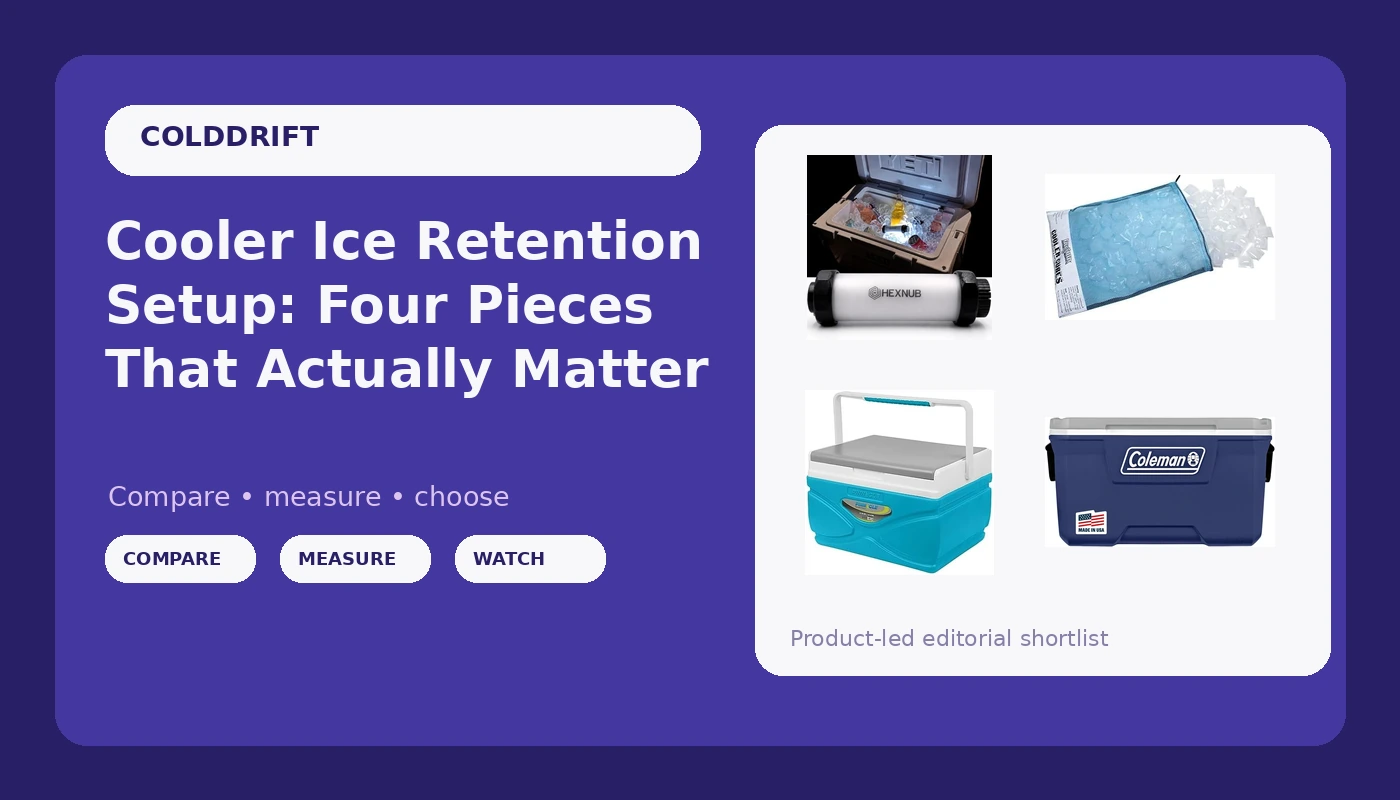
Cooler ice retention setup is not one purchase. It is a small system. The box holds the cold, the ice is the cold, the seal keeps the cold from walking away, and a couple of small accessories decide whether a long day at the lake ends with cold drinks or a box of lukewarm water. If you have ever opened a lid on a Saturday afternoon and found a sad puddle where two bags of ice used to be, the failure was probably not one thing. It was a thin-walled box, a gasket that stopped sealing, a drain plug nobody tested, or ice thrown in warm next to warm food. This explainer walks through four products that cover different parts of that system, what each one is actually for, and how the pieces fit together so you can pack once and stop guessing.
Related: How to Pack a Cooler So the Ice Lasts Longer →
Quick answer
Cold is a chain, and every link matters: a hard cooler with real insulation, enough ice or refreezable cubes to fill the empty space, a clean seal, and gear that makes the box easier to live with after sunset. For most people the anchor is a mid-size hard cooler. Reusable cubes stretch the ice you already have and cut down on meltwater. A cooler light solves the after-dark problem of digging through a box you cannot see into. A small picnic-size cooler covers short trips where hauling a big box makes no sense. No single one of these is the right answer for everyone, because they cover different jobs. The size decision inside a cooler line is usually the one that matters most, since a cooler you cannot lift when it is full is a cooler that stays in the garage.
Four useful options
| Model | Best fit | What stands out |
|---|---|---|
| Coleman Classic Series Insulated Portable Cooler | Long weekends and large loads | Offered in 52, 70, 120, and 150 quart sizes; the listing describes ice retention up to 5 days |
| Cooler Cubes 5 lb Bag of Reusable Ice Cubes | Filling dead space and limiting meltwater | Reusable, refreezable cubes sold as a 5 lb bag |
| HEXNUB Cooler Box Light | Finding things after dark | Waterproof, rechargeable LED built for cooler boxes |
| Picnic Cooler 4.5 Liter Hard Cooler | Short trips and small loads | 4.5 liter BPA free hard cooler; the listing describes contents staying cool for 48 hours |
The anchor cooler: Coleman Classic Series Insulated Portable Cooler
The quart range is the interesting part here, and it is also the trap. A 150 quart box sounds like more value per dollar until you fill it with ice and drinks and try to move it. A 52 quart is the size most people can still carry with a friend when it is loaded. The other thing to understand is what "up to 5 days" means. That figure comes from the manufacturer and assumes a set of conditions: a full load of ice, a lid that stays shut, and moderate outside temperatures. A cooler that keeps ice for days in a shaded garage does not do the same on a black asphalt parking lot in August. Treat the number as the ceiling, not the promise, and plan your ice around the worst day of the trip rather than the best one.
The ice extender: Cooler Cubes 5 lb Bag of Reusable Ice Cubes
Air is the enemy of a cooler. Every gap between a drink and the lid is a pocket of warm air that has to be chilled before anything else gets cold, which is why a half-full cooler loses ice faster than a full one. Reusable cubes are a practical answer to that problem: they take up volume, they do not turn into meltwater, and you can freeze them again before the next trip. The trade-off is honest. Cubes do not chill a drink the way real ice does, and they do not buy you extra days the way a second block of ice does. What they do is hold the cold you already have and keep the inside of the box from turning into a swimming pool, which is often the difference between dry sandwiches and soggy ones on day two.
The after-dark helper: HEXNUB Cooler Box Light
Every lid opening costs cold air, and the worst offenders are the ones where you cannot see anything. You stand there with the lid up, pawing through ice water for a can that turns out to be in the other cooler, and thirty seconds later the box has lost ground it will not get back. A light mounted inside the box cuts that down. It is not a glamorous purchase, and it will not extend your ice by a day on its own. It fixes a specific, repeatable problem: night fishing, tailgates that run past sunset, camping where the last thing you want is a headlamp pointed into a cooler full of food. The waterproof and rechargeable details matter here because coolers are wet and cold, and gear that needs disposable batteries tends to be gear that dies at the wrong time.
The small-load option: Picnic Cooler 4.5 Liter Hard Cooler
This is the cooler that stops you from dragging a 70 quart box to a two-hour picnic. A 4.5 liter box holds a lunch, a few drinks, and a couple of cold packs, and it fits behind a seat or under a bench. The 48 hour cooling figure is a manufacturer claim measured under controlled conditions, so read it as "a full day out is reasonable, a three-day float trip is not." The BPA free detail matters to people packing food directly against the walls, and the hard shell means it will not collapse under a camp chair the way a soft bag can. Where it earns its place is as the second cooler: drinks go in the small box so the main cooler stays shut, which is one of the cheapest ice retention tricks there is.
Prices and availability may change. Product images, names, and retailer links are matched to verified listings. No current price, rating, stock status, or measured result is stated here without current evidence.
What actually decides how long ice lasts
Manufacturers print ice retention numbers because shoppers ask for one number. The honest answer is that ice life is a stack of variables, and the box is only one of them.
Insulation construction comes first. Rotomolded coolers are molded as a single piece with thick foam walls, which is why they hold ice longer and cost more. Injection-molded coolers like the Coleman Classic Series are built differently: thinner walls, a lower price, and a shorter realistic window. Neither approach is dishonest, but they are not interchangeable, and a budget box will not perform like a premium one no matter how you pack it.
The gasket and the lid come second. The rubber seal around the rim is what keeps cold air from draining out, and a gasket that is warped, dirty, or pinched is a cooler that lies to you. Wipe it down, look at it in good light, and check that the lid closes with even resistance all the way around.
The ice itself comes third. A cooler packed with loose cubes and lots of air has to chill that air before it chills anything else. A cooler packed tight with a mix of block ice and cubes has almost no air to fight. Fill the gaps, and you have effectively added capacity you did not pay for.
Ambient conditions come fourth. Direct sun, a hot truck bed, and a lid that opens every ten minutes will beat a good cooler. Shade, a blanket over the top, and a second small cooler for drinks will let a modest box outperform its spec sheet.
How to build the setup for your trip
- Decide the real load before the box. Count the people, the meals, and the drinks, then size up rather than guessing at the store.
- Choose a capacity you can carry when it is full. Ice and drinks are heavy, and a box that stays home because it is too much to lift is not saving you anything.
- Fill the dead space. Pack the cooler tight and use reusable cubes or extra ice to eliminate air pockets.
- Pre-chill everything that goes in. Cold food and cold drinks stop the ice from spending its first hours cooling down your groceries.
- Check the seal and the drain plug before you leave. Fill the box with an inch of water, close it, tip it, and watch for drips at the plug and the rim.
Practical guidance
- Keep the cooler out of direct sun and cover it with a blanket or towel when it is sitting on a dock or a tailgate.
- Use a separate small cooler for drinks so the main box gets opened less often.
- Drain meltwater when it starts to pool, since water sitting on ice speeds up the melting rather than slowing it.
- Freeze water bottles and use them as block ice, then drink them as they thaw.
- Store the cooler with the lid open between trips so the gasket and interior dry out instead of growing mildew.
Which option should you choose?
Choose the Coleman Classic Series Insulated Portable Cooler when you need a hard-sided box for a weekend of food and drinks and you want to pick the quart size that matches your load. Choose the Cooler Cubes 5 lb Bag of Reusable Ice Cubes when your cooler always ends up half empty and you are tired of pouring meltwater out at the end of the day. Choose the HEXNUB Cooler Box Light when your trips run past sunset and you are tired of searching a dark box by feel. Choose the Picnic Cooler 4.5 Liter Hard Cooler when the trip is short, the load is small, and hauling a big box would be more work than the outing itself.
None of these four is a substitute for the others, and none of them is a guaranteed result. Ice retention figures quoted by manufacturers, including the 5 day and 48 hour numbers referenced above, come from controlled testing conditions rather than a specific campsite on a specific weekend.
The bottom line
A cooler ice retention setup works when the parts match the trip. Pick a hard cooler in a size you can actually lift when it is loaded, pack it tight with cold contents and reusable cubes, keep the lid closed and the box out of the sun, and check the gasket and drain plug before you leave rather than after the ice is gone. Add a light if you fish or camp after dark, and keep a small box for the short outings so you are not hauling the big one to a picnic. Do those things and the number on the box stops being a marketing claim and starts being a reasonable expectation.