I have watched a cheap cooler turn eighty dollars of walleye into a warm, sad smell by noon, and I have watched a good one hold ice through a Sunday morning on Lake Superior. I guide fishing trips out of Duluth, Minnesota, and by day two my clients only care about two things: is the fish still cold, and is the bread still dry. That is why cooler ice retention and dry storage are the two specs I judge any box by, and it is why this comparison is built around four Amazon listings: the Coleman Classic Series insulated rolling cooler, two separate listings for the Pelican 14 Quart Cooler, and a cooler net that attacks the dry storage problem from a completely different direction.
Here is the short version before the table. If you need one box you can move by yourself when it is loaded, the Coleman rolling cooler is the practical pick. If you need a small hard box that survives a boat deck and a truck bed, the Pelican 14 Quart is the one I would grab. The cooler net is the cheapest thing on this list and the only one that solves soggy sandwiches, but it does not keep anything cold.
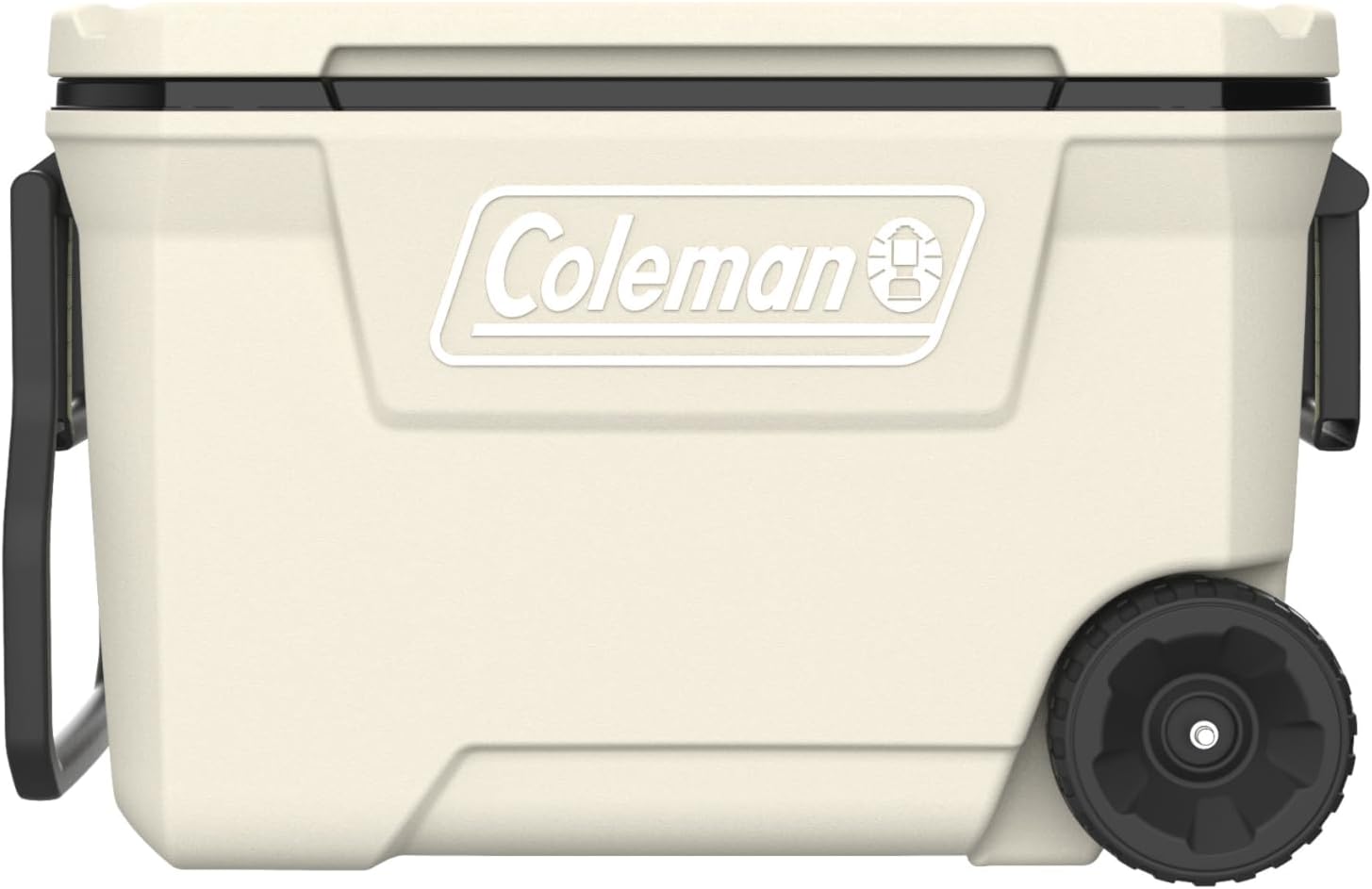
Coleman Classic Series Insulated Portable Rolling Cooler
Wheels and a handle mean one person can move a loaded box; leak-resistant hard body; the manufacturer claims ice up to 5 days
The 5-day figure is the best case, not the average case; wheel wells and a handle cost interior volume; not built to premium abuse standards
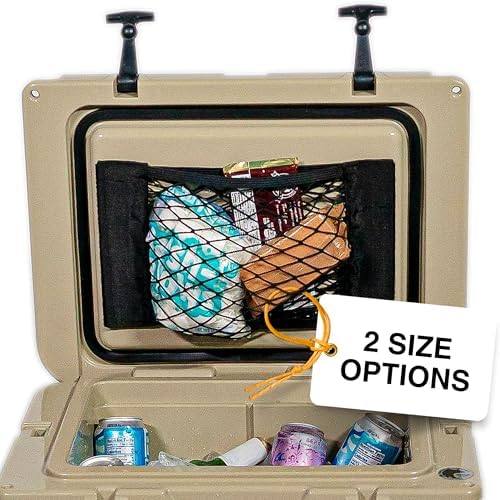
Cooler Net for Dry Storage and Organization
Turns dead lid space into dry storage; fits YETI, RTIC, Ninja, Igloo, Coleman, Lifetime and Pelican boxes; plays with cooler lights and wheel kits
It is not a cooler; it adds zero ice retention; only useful if you actually carry dry goods
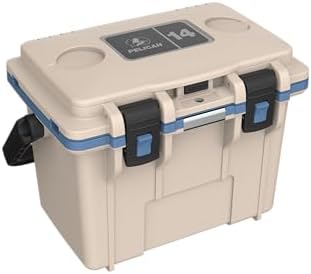
Pelican 14 Quart Cooler
The abuse-tolerant box of the group; small enough to lift when full; real latches, no cupholder nonsense
14 quarts is a day, not a weekend; price per quart runs high; you will repack ice on a long trip
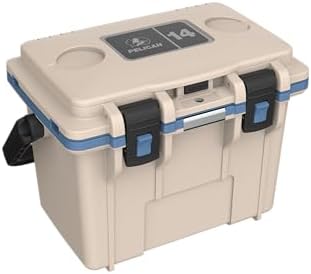
Pelican 14 Quart Cooler (second listing)
Same box, separate listing, so stock and price move independently; a second chance when one page is sold out
You have to compare two pages instead of one; easy to pay more on one listing than the other
Prices and availability were captured from Amazon Creators API and may change.
What is actually in this comparison
This is not four coolers. It is two cooler models and one accessory, plus a duplicate listing. The Coleman is a wheeled hard cooler built for moving a full load across a parking lot, a beach, or a tailgate field. The Pelican 14 Quart Cooler is a small heavy-duty box that appears twice here because it is sold under two separate Amazon records. The cooler net is not a cooler at all: it is a storage net that mounts on a hard cooler and holds the gear you do not want sitting in melt water.
That mix matters, because the most common mistake I see on the water is people buying a bigger cooler when what they actually needed was a smaller box and a place for the dry goods. Ice eats roughly half of any cooler's usable volume once you pack it the right way, and every quart you add is a quart of water weight you have to lift later. If you have ever stood on a dock at 6 AM trying to decide between the sandwiches and the second bag of ice, you already understand the trade.
The Coleman rolling cooler: portability over insulation
Coleman names this box for two things: it rolls, and it is leak resistant. The product name also carries the claim that it keeps ice up to 5 days, and that is the number everyone asks me about first.
Here is how I read a claim like that. Five days is the optimistic end of a range, not a promise for your Saturday. Manufacturer numbers assume a pre-chilled box, block ice, a lid that stays shut, moderate air temperature, and almost no opening. Real trips involve twenty lid openings a day, drinks going in warm, direct sun on a boat deck, and a box sitting in the back of a truck. Cut the number on the box roughly in half and you are in the neighborhood of what a well-managed cooler actually does. That math still leaves the Coleman as a perfectly good box for a picnic, a tailgate, or a day at the lake with the family.
The feature that earns it a spot on this list is the wheels. A loaded hard cooler is heavier than people expect, and a box you cannot move by yourself is a box that stays in the garage. The trade-off is that wheel wells and a handle take up space and add moving parts, and a rolling cooler in this class is generally not built to the same abuse standard as a one-piece premium box. For family duty and short trips, that is the correct trade. For a three-day trip with fish on ice, I want a lid that seals hard and a box I can strap down on a deck. Visit on Amazon →
The Pelican 14 Quart Cooler: the abuse-proof small box
If you have read anything else I have written about coolers, you know where I land on Pelican. It is the brand I have watched survive a boat deck for a decade. The 14 Quart Cooler is the smallest expression of that idea: a hard-sided box with real latches, a lid that closes with resistance instead of a slam, and no cupholders pretending to be features.
Fourteen quarts is a small box, and I mean that as a compliment. It is a day of lunch and drinks for two, a limit of panfish, a few bottles, a client's medication and cold packs, or the box you hand to a kid to carry because it is the one cooler in the truck that a kid can actually carry. It nests into a truck bed or a kayak hatch without a second thought, and it is the size where you can honestly lift it when it is full. That is the only capacity spec that matters at the dock.
What you give up is volume, plain and simple. Fourteen quarts will not feed four people for a weekend, and on a hot day you will be adding ice by evening. If your trips are day trips, that is not a loss. If your trips are three days, this is a companion box, not the primary. Visit on Amazon →
Why there are two Pelican listings
Two of the four records in this comparison carry the same name: Pelican 14 Quart Cooler. That is not a typo and it is not two different boxes. It is the same cooler listed under two separate records, which is common with popular hard coolers because colorways, seller variations, and bundle versions all get their own page.
Practically, that is a shopping advantage rather than a problem. Price, stock, and shipping windows on the two listings move independently, so if one page is sold out or priced high on the day you are buying, the other is worth a look. The only real cost is that you have to open two tabs instead of one. If you decide on the Pelican, check both records before you commit and buy whichever one is available and better priced that day. Visit on Amazon →
The cooler net: dry storage for the box you already own
The cooler net is the odd one out in this comparison, and it is also the cheapest upgrade. It is a net for dry storage and organization, compatible with YETI, RTIC, Ninja, Igloo, Coleman, Lifetime and Pelican ice chests, and it is designed to work alongside cooler lights and wheel kits.
Why that matters more than it sounds: melt water is the enemy of everything that is not a beverage. Bread, chips, a phone, keys, a dry towel, the bag of coffee for Saturday morning. Every guide I know has some version of this problem, and the usual fix is a second dry bag that takes up space you do not have. A net solves it by using dead space instead, which is the whole appeal. It is the difference between a sandwich you eat and a sandwich you throw at a seagull.
The trade-off is obvious and I will not dress it up. A net does not hold ice, does not lower the temperature inside the box, and does not turn a budget cooler into a premium one. It is an organizer, and it is worth buying only if you own a compatible hard cooler and you are tired of wet gear. Visit on Amazon →
Ice retention: the number on the box versus the number in your log
The only spec that matters is ice retention, and it is also the spec most likely to be quoted at you from a shelf tag instead of a temperature log. Every claim on a cooler box is a best case: pre-chilled interior, block ice rather than cubes, lid closed, mild ambient temperature, nobody digging for a drink.
My rule of thumb after enough trips to know better: take the number on the box, cut it in half, and treat that as the realistic result for a cooler you manage well. For a 14-quart box, the honest target is a long day and a cold next morning, not a weekend. For a wheeled family cooler, the honest target is a full day of tailgating and a second morning of ice.
That is why I run a three-day test rather than a one-afternoon opinion. Nine units on the current bench, twenty pounds of ice each, a temperature log that starts at 6 AM Thursday and ends Sunday. A cooler either shows up in the log or it does not. If a brand cannot show me the log, the claim is marketing, not performance.
Gaskets, latches, and drain plugs: the three failure points
Three things end trips early, in this order.
The gasket is the whole game. The rubber seal around the lid is what separates a cooler from a plastic box with a lid, and a warped gasket is a cooler that lies to you. Run your thumb around the seal before you buy. Look for a continuous lip with no flat spots, and make sure the lid closes with a little resistance. If the lid drops shut on its own, the seal is not doing much.
Latches come next. Rubber straps survive rough roads better than thin plastic clips, and a latch that pops open on a washboard road costs you the cold air you paid for. Test the latch by closing it and tugging the lid. It should feel like it is holding something, because it is.
Drain plugs last. A drain plug is a feature until it leaks, and then it is a hole in your cooler. Fill the box in the driveway before your trip and watch the plug. If it weeps, you found the problem at home instead of on the water, which is the cheapest possible place to find it.
Capacity, honestly: 14 quarts is a day, not a weekend
Do the math before you buy, because the marketing never does it for you. Ice should fill roughly half of a properly packed cooler. That means a 14-quart box holds a day of food and drinks for two people plus the ice to keep it cold, and a wheeled family cooler holds a picnic load that you can move with one hand on the handle. Neither one is a three-day expedition box, and neither one claims to be.
A cooler you cannot lift when it is full is a dock ornament. Size honestly, then add a second small box for drinks if you need the volume. Two boxes you can carry beat one box you cannot, every single trip.
The trade-offs in one place
- The Coleman rolling cooler wins on price and portability, and loses on insulation class and on the optimism of a 5-day ice claim.
- The Pelican 14 Quart wins on abuse tolerance and honest liftability, and loses on capacity and on price per quart.
- The cooler net wins on price and on solving wet gear, and loses because it is an accessory, not a cooler.
- The second Pelican listing wins on shopping flexibility, and loses because it makes you compare two pages.
Who should buy which
Buy the Coleman Classic Series rolling cooler if your trips are tailgates, picnics, beach days, and short family outings, and you want one person to be able to move a full cooler without help. It is the value pick of the group and it does the job it was built for. Visit on Amazon →
Buy the Pelican 14 Quart Cooler if your trips are day trips, boat days, kayak days, or if you need a small box that takes a beating and still seals. Check both listings before you buy, because they do not always agree on price. Visit on Amazon →
Buy the cooler net if you already own a compatible hard cooler and you are tired of wet bread. It is the smallest purchase here and the one most likely to change how a trip feels by Saturday afternoon. Visit on Amazon →
What I am testing next
The three-day ice test is still running on the bench: nine units, twenty pounds of ice each, a temperature log that starts Thursday at 6 AM and closes Sunday. The small boxes are the interesting ones this year, because a 14-quart cooler has almost no thermal mass to hide behind, and the log exposes that fast. I will publish the numbers when the last reading is in, and I will say plainly which boxes held and which ones quit on day two. Until then, buy the size you can lift, check the gasket before you trust it, and test the drain plug in your driveway. A cooler is a promise. Most of them lie, and the log is how you catch them.