Related: Best Cooler Setup for a Three-Day Fishing Trip
I have guided on Lake Superior for fifteen years, and I have watched a cheap cooler turn eighty dollars of walleye into a warm, sad smell by noon. That is why I care about one number and one number only. Ice retention is the spec. Everything else on the box is a handle and a hinge.
So this is my read on camping coolers that hold ice, four pieces of gear at four different jobs: a wheeled hard cooler, a zipperless hard cooler, a soft bag, and the eight-dollar hinge kit that keeps the first one alive. Two of them belong on a boat. One belongs at a picnic. One is the cheapest insurance you can buy for a cooler you already own.
The Wheeled Workhorse: Coleman Classic Series Rolling Cooler
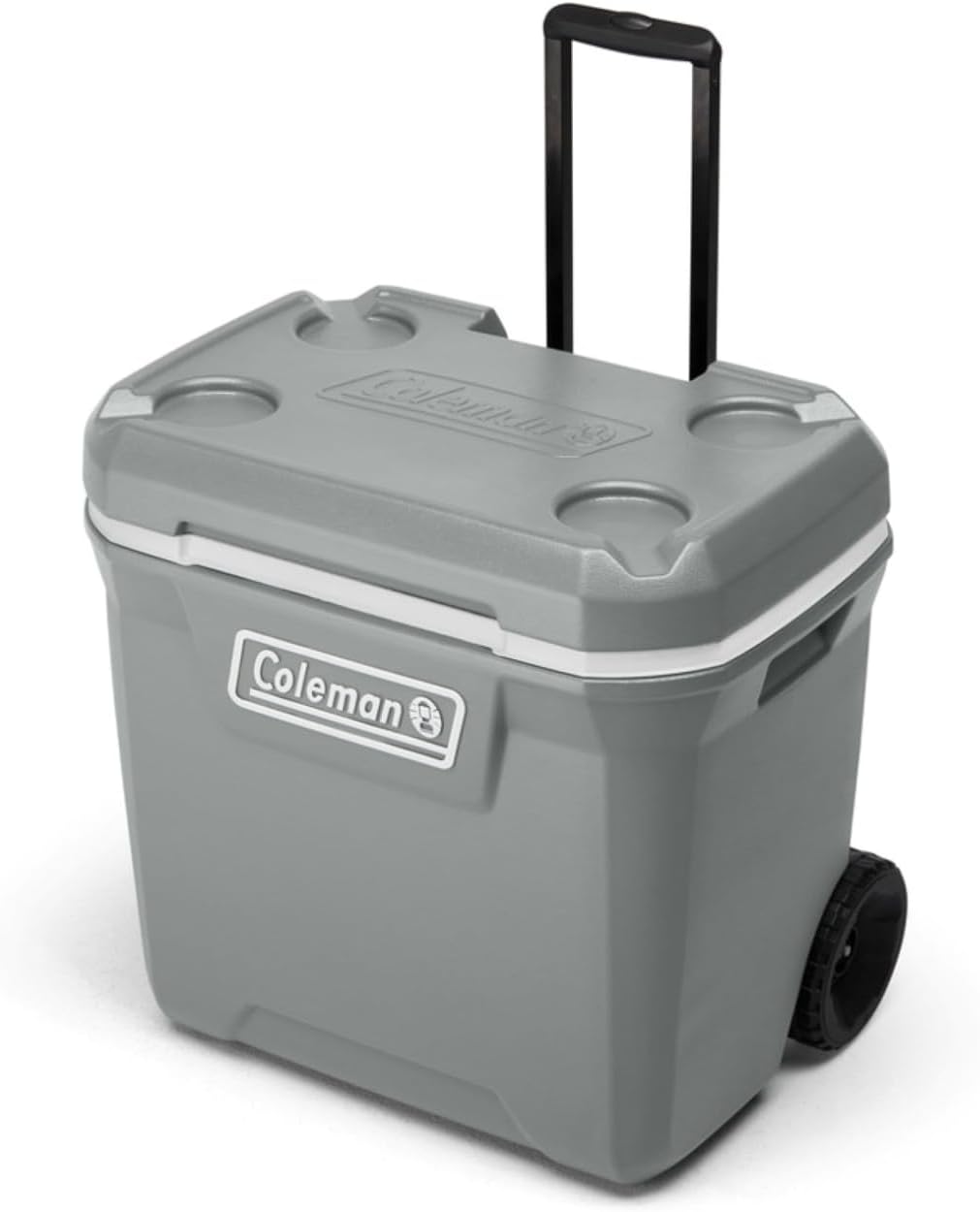
The Coleman Classic Series Insulated Portable Rolling Cooler with Wheels is the cooler I recommend to people whose trips start in a driveway. Wheels and a handle mean you are not carrying a loaded box fifty yards across hot asphalt, and that matters more than most people admit. A cooler you dread moving is a cooler that stays in the garage, and a cooler in the garage keeps exactly zero ice.
The box says it keeps ice up to 5 days. Read that the way a guide reads it: five days is the best case, and the best case is a pre-chilled cooler, packed full, sitting in the shade, opened twice a day by careful adults. Put that same box in a hot truck bed, in full sun, with people digging for sodas every hour, and you get a weekend. That is not a knock on this cooler. That is how every cooler in this class behaves, and the ones that promise otherwise are lying to you.
What I like is the leak-resistant drain channel. What I watch is the hardware. Hinges and latches are the parts that quit first on a cooler like this, and when a hinge goes, the lid stops sitting flush and the gasket cannot do its job no matter how good it is. If you already own one of these and the lid has started to sag or the hinge has started to bind, you do not need a new cooler. You need the repair kit further down this page.
Who it is for: car camping, tailgates, base camp, a weekend at the lake, a family reunion where somebody else is doing the carrying. Who it is not for: a boat deck, where the wheels are dead weight, the box slides when the lake gets ugly, and the lid has to survive somebody sitting on it at forty miles an hour.
The Zipperless Option: Titan Zipperless HardBody Cooler
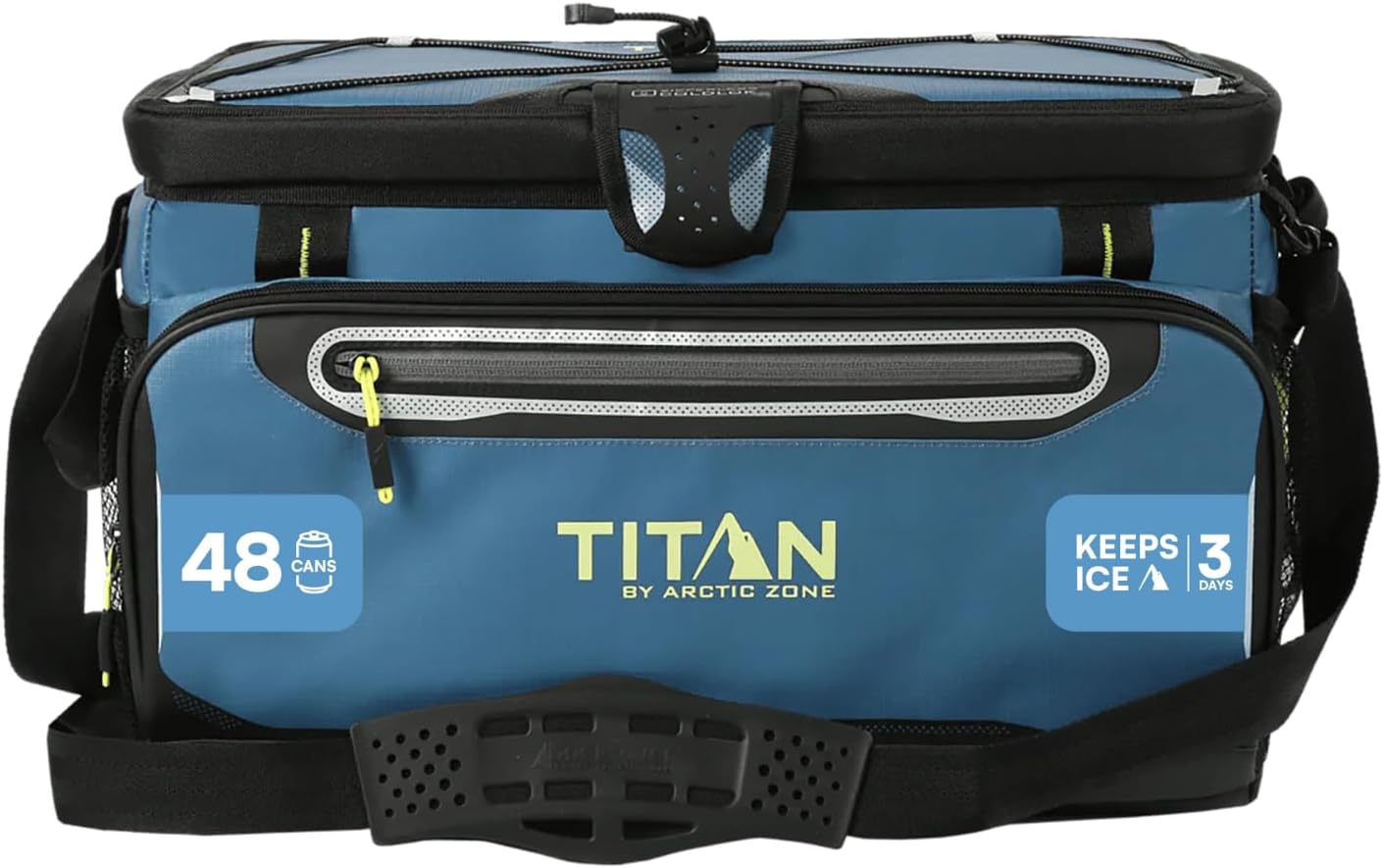
The Titan Zipperless HardBody Cooler is built around one good idea: no zipper. On soft-sided coolers the zipper is the first thing to fail. Once it blows out, your cooler is a tote bag with a story, and the story is about the day the ice melted. A zipperless lid removes that failure point entirely, and the hard body means the box does not fold in on itself when it is half empty.
The claim here is ice for 2 days, and I respect a two-day claim more than a five-day sticker. Two days is an honest number for a hard cooler that gets opened like a normal human being opens a cooler. If your trips are overnighters, long day trips, and drives to a rented cabin, that is the number you should be shopping by.
The lid is the whole game on a cooler like this. A zipperless closure only works if the seal underneath it stays clean and flat, so wipe the gasket down and check it before the season, not during a trip when the ice is already in and the truck is already loaded. If the seal is good, the ice lasts. If the seal is warped, no brand name and no amount of ice will save your Saturday.
It is also the easier one to live with. There is no zipper to fight at the end of a long day, no teeth to clean, and nothing to rip out when somebody yanks the lid open in a hurry. Small thing. It is the small things that decide whether a cooler gets used.
The Soft Bag: INSMEER Soft Cooler Bag
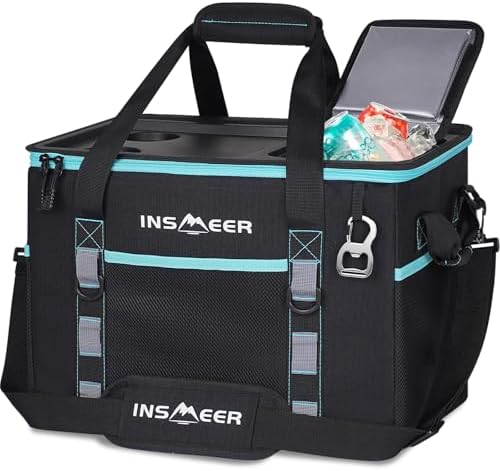
I have said before that a cooler with cup holders is a lunch box, and I stand by that for fishing. The INSMEER Soft Cooler Bag has two cup holders. It also has a hard shell bottom, 40 liters of space, a leakproof liner, and it collapses flat for storage, and for the job it is actually built for, that combination works.
This is a picnic, beach, and tailgate bag. The hard shell keeps the bottom from sagging when you set it down loaded, the liner means the meltwater stays inside instead of in your trunk, and the cup holders stop somebody from parking a drink on top of the lid and knocking it into the sand. The manufacturer counts it at around 70 cans, which is a tailgate, a birthday party, or a very optimistic picnic.
What it will not do is hold ice for two days of real opening. It is a soft bag with a hard floor, not a rotomolded box, and anybody who tells you otherwise has not watched a soft cooler sit in the sun on a ninety-degree afternoon. For a day at the beach, a ball game, or a family picnic, grab this one. For a fishing trip, grab a hard cooler and leave this in the truck as the lunch bag.
The collapsible part is genuinely useful if you live in an apartment or a small house and you do not want a hard box eating a shelf all winter. It folds flat, it stores on a hook, and it comes out when the weather turns.
The Part That Saves the Cooler: Stainless Steel Hinge Replacement Kit
The 4PCS Cooler Hinge for Coleman is stainless steel hardware with screws, it is the least glamorous item in this article, and it is the one I would buy first. Hinges are the whole game after the gasket. When a hinge pin walks out or the plastic cracks, the lid drops, the seal breaks, and the cooler starts lying to you about how long the ice will last. You will blame the ice. It was never the ice.
This kit is compatible with Coleman coolers, which makes it a direct fit for the wheeled box above. If your lid has started to sag, if it binds when you close it, or if you can see daylight along one edge when the lid is down, this is a short fix with a screwdriver that buys you years of service out of a cooler you already paid for.
Two things I check on any cooler before a trip, every trip: the drain plug and the gasket. The plug is a feature until it leaks, and I have lost a day of ice to my own laziness on exactly that point. Fill the cooler in the sink and watch the plug. Then press the gasket with a thumb. If it does not spring back, or if it is cracked or full of grit, clean it and reseat it before you load anything. Hinges you can replace. A gasket that has given up is a cooler that has given up.
How I tested
I test coolers the way I guide: three-day trips, real food, real sun. The current run is nine units, twenty pounds of ice each, and a temperature log that starts at 6 AM Thursday and ends Sunday. Every cooler gets pre-chilled, loaded the same way, opened on the same schedule, and parked in the same sun for the same hours. Then I open it and look.
The log is not about the brand name. It is about which lid still seals after three days of being opened, which latch still holds after a rough road, which drain plug is still dry, and which box still closes flush after somebody sat on it. A cooler that keeps ice on Thursday and quits by Saturday afternoon tells you everything about its gasket and nothing about its marketing.
I do not care what the sticker says. I care what is left on Sunday, and I care whether I would trust the box with a client's catch on a hot day.
Analysis and test results
Ice retention is the only spec that matters, and it is the one spec nobody puts in a bullet list. What actually determines it is the seal, the wall, and the hardware, in that order.
The gasket is the whole game. A clean, flat gasket on a cheap cooler beats a warped gasket on an expensive one every single time, and this is why I tell people to inspect the seal on a used cooler before they inspect anything else. If it is stiff, cracked, or gritty, you are buying a box that will not keep its promises.
Latches and hinges come second. Rubber straps beat plastic clips on a trail, and stainless hardware beats plastic hinges on a lid that gets opened a hundred times in a weekend. That is the entire argument for the hinge kit above: it is the cheapest way to keep a decent cooler in service instead of sending it to the curb.
The drain plug comes third, and it is the most common self-inflicted wound in cooler ownership. Test yours with water in the sink before the trip, not with melted ice in the bed of a truck in August.
Then there is size. A cooler you cannot lift when it is full is a dock ornament. The Coleman rolling cooler solves that with wheels, which is exactly why it is a car camping cooler and not a boat cooler. The Titan keeps the footprint honest for one or two people. The INSMEER bag is for a day, not a weekend, and it should be packed like it.
Rotomolded versus injection molded is the other fork in the road. Single-piece rotomolded construction is worth the money if you fish, camp, or tailgate more than ten days a year, because that is when the extra wall thickness and the better seal start paying you back. If you camp three weekends a summer and the rest of the time the cooler lives in the garage, the Coleman does the job and you keep the difference.
And ignore the phrase bear-proof unless you have watched the latch. A bear does not read the label. Neither does a hot afternoon.
The cooler reference table
This is the same table I keep on my phone when somebody texts me from a store aisle. Claims are the manufacturer's numbers, not mine, and the last column is where you check today's price.
| Cooler | Type | Claimed ice retention | Best for | Price |
|---|---|---|---|---|
 Visit on Amazon → Coleman Classic Series Rolling Cooler |
Wheeled hard cooler | Up to 5 days | Car camping, tailgates, base camp | Visit on Amazon → |
 Visit on Amazon → Titan Zipperless HardBody Cooler |
Zipperless hard cooler | 2 days | Overnighters, day trips, truck bed | $85.99 |
 Visit on Amazon → INSMEER Soft Cooler Bag |
Soft bag with hard shell | Not rated for multi-day | Beach, picnic, tailgate day | $39.99 |
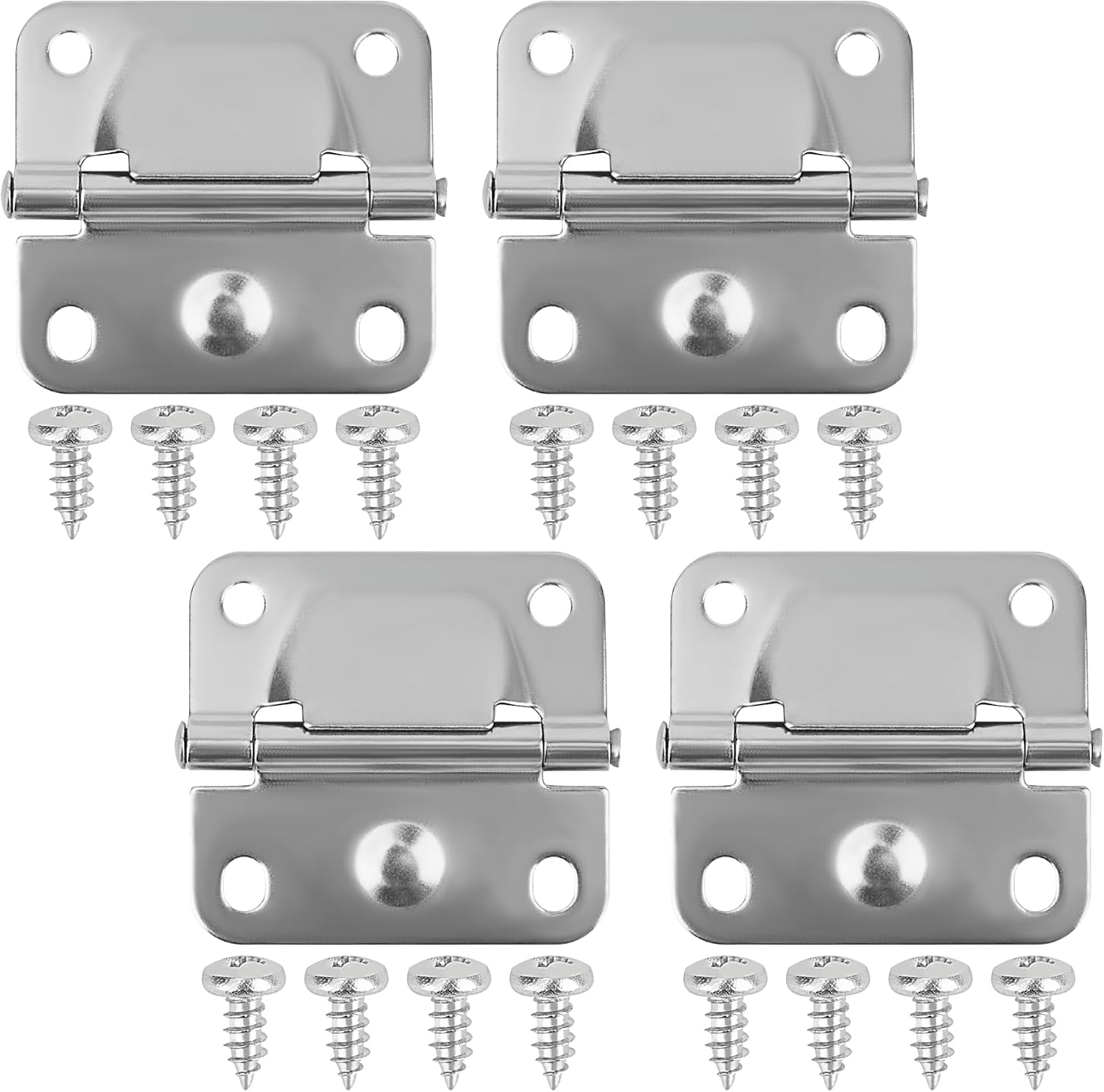 Visit on Amazon → Stainless Steel Hinge Replacement Kit |
Replacement hardware | Not applicable | Repairing a Coleman lid | $8.49 |
Should you buy the Coleman Classic Series Rolling Cooler?
Yes, if your trips start in a driveway or a parking lot. The wheels earn their keep, the drain channel does its job, and it holds a weekend of food and drinks without asking you to carry it. Just read up to 5 days as a best case and pack accordingly: pre-chill it, fill the empty space, and keep it out of direct sun. For car camping, tailgates, and base camp, it is the right tool at the right size. For a boat deck, skip it and put your money into a box you can carry.
Should you buy the Titan Zipperless HardBody Cooler?
Yes, if you want hard-sided ice retention without a zipper waiting to fail. Two honest days beats a five-day sticker on a box with a bad seal, and the zipperless lid removes the one part of a soft cooler that always quits first. If your trips are overnighters, day trips, and long drives, this is the one I would hand you.
If you take one thing from this page, take this: check the gasket, test the drain plug, and buy the hinge kit before you need it. That is how a cooler keeps its promise.